

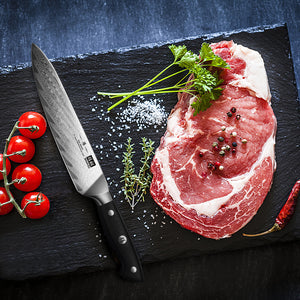
What Is a Kitchen Utility Knife?
A kitchen utility knife is an extremely useful tool to have around the kitchen. Since there are so many different types of knives, it can be hard to discern which knife is best suited for which purpose. This is a complete guide to kitchen utility knives, so after reading this, you can instantly identify a kitchen utility knife and use it correctly.
A utility knife is a lightweight knife that typically has a smaller blade compared to some other types of knives. A kitchen utility knife is anywhere between 4 to 7 inches long. This makes it slightly larger than a paring knife but much smaller than other types of knives, like a carving knife or a bread knife. The blade of a utility knife can either be straight-edged or serrated. Since it is smaller in size, a utility knife is perfect for chopping vegetables or fruits and doing detailed cutting if necessary. The small size provides more control and makes it easier for the user to cut more precisely.
What Is a Utility Knife Used for in the Kitchen?
A kitchen utility knife is a very versatile knife that has multiple uses around the kitchen. This is one knife that you must have in your kitchen since it has so many uses. Here are just some of the uses of a kitchen utility knife:
- Using a Utility Knife for Cheeses
Slicing or cutting up cheese can be a challenge. This is particularly true for cheeses that are soft and require a sharp, thin blade for a clean, even cut. A utility knife is perfect for the job since it has a blade that is sharp and thin enough to get very thin slices without causing the cheese to crumble or break. It is easy to maneuver the knife over soft surfaces like cheeses.
- To Slice Meat Chubs (Salami, Summer Sausage, Etc.)
While uncooked meat requires a much sharper and larger knife, a utility knife is great for slicing and dicing tender cuts of meat. Whether it be cooked chicken breasts, salami, sausages, or any other kind of cooked meat, a utility knife can easily get the most precise cuts.
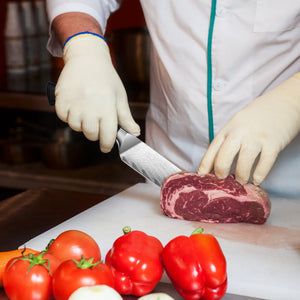
- As a Backup Steak Knife (Our Favorite!)
Speaking of cooked meats, you can substitute a utility knife for a steak knife. A steak knife is used specifically for cutting through steak and since a utility knife works perfectly on cooked meats, using it in place of a steak knife makes sense.
- To Make Veggie Slices (Cucumbers, Zucchini, and Other Squashes)
Utility knives are used for cutting vegetables because they are the perfect in-between knife, just the right size for most vegetables. While a paring knife may be too small for vegetables such as potatoes or squash, and a chef's knife may be too big for vegetables like green chilies, a utility knife strikes the right balance. Cutting vegetables into slices is easy with a utility knife because it provides greater control.

- To Trim Chicken or Fish
A utility knife is sharp enough to trim fish and chicken. While raw meat is tougher and requires a sturdier blade, poultry is easier to cut, and a utility knife works just as well.
- Slicing Long, Thin Vegetables (Think Green Beans, Celery, Green Onions, Etc.)
The thin blade of a utility knife means that you can cut very long, thin vegetables without breaking a sweat. Green beans, celery, and green onions do not fare well when cut with a thicker blade. Using a utility knife on such vegetables produces great results.
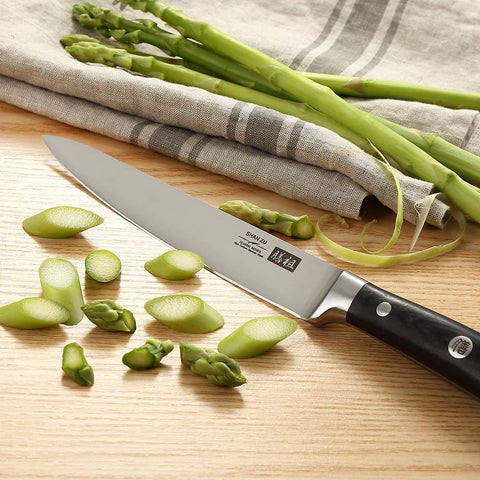
- To Cut Up Citrus Fruits (Lemons, Limes, Grapefruit)
Some citrus fruits have very tough skin and can be difficult to peel. A utility knife can be used to peel and cut any kind of citrus fruit, from lemons and limes to tangerines and grapefruits. A paring knife may be too small for larger citrus fruits, so if you want a single knife for all kinds of fruit, then a utility knife is the best choice. You can even use the knife's sharp point to remove the seeds.
- As a Sandwich Knife
The moderate size of a utility knife makes it a great knife for making sandwiches. A good sandwich knife should be large enough to cover the entire slice of bread, but small enough to be easy to hold and use.
- Slicing Sandwiches
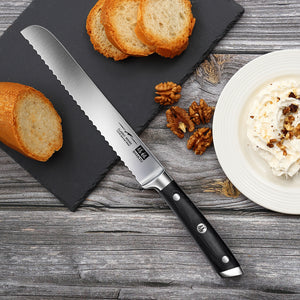
A utility knife is not only good for making sandwiches, but also for cutting and slicing them. This is especially true if you own a serrated utility knife, since its edge is perfectly suited for cutting through bread without applying much pressure or ruining the slice.
Why Do You Need a Good Utility Knife?
If there is just one knife you have to keep in your kitchen, then it should be a utility knife. This is primarily due to its multifunctional use. As already mentioned, a utility knife is very handy around the kitchen since it can be used for everything from slicing bread to dicing fruits and vegetables and even cutting tenderized meat.
A paring knife is far too small and is only good for cutting small fruits and vegetables and performing detailed work. On the other hand, a chef's knife is much larger and is not easy to use, especially if you are an amateur cook. A utility knife is the perfect middle ground, making it a true kitchen essential.
What to Look for in a Utility Knife?
Buying a knife is an investment, not just in terms of money but also in time and effort. Finding a good utility knife is important if you are to enjoy your time in the kitchen, since no one wants to deal with a knife that is a hassle to use.
There are certain key features to look for when choosing a utility knife. The first is the length. A utility knife is typically between 4 and 7 inches long; anything shorter or longer will be too uncomfortable to use. The next characteristic is the knife's weight. It should have a balanced weight. It should not be so heavy that it is difficult to hold and use, but its weight should help distribute pressure and control the blade. It is never ideal to have a knife that is too heavy or too light; it should be suited to what you can use comfortably over an extended period.
When it comes to blade material, stainless steel is hands down the best option. Always look for a high-quality stainless-steel blade, as it is strong, durable, and does not rust or dull easily. Stainless steel is also hygienic because it is easy to clean.
Finally, consider the handle. It should fit comfortably in your hand. Try holding it and applying some pressure to test how it feels. A simpler handle with few curves is good. You can even get utility knives with ergonomically designed handles if you are willing to invest.
Shanzu's Best Utility Knives
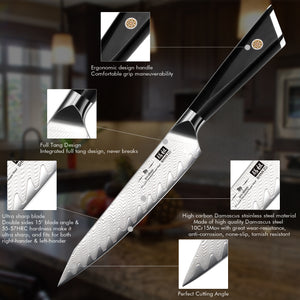
If you are looking for the best utility knife to add to your kitchen, then Shanzu has the best blades out there. The company makes all kinds of knives used by everyone from home cooks to professionals. Shanzu uses Damascus steel in its knives, which enhances their longevity and functionality.
Their kitchen utility knives are made with exceptional finesse and skill. The professional-quality knives are made with Japanese AUS-10V high-carbon stainless steel that is resistant to rust and corrosion. They feature sturdy, extremely thin blades that provide maximum flexibility.
The Shanzu utility knife is made of an impressive 66 layers of stainless steel and has an ergonomically designed handle for an effortless, comfortable grip. The handle has a unique triangular shape that fits perfectly in the fist and is made of high-pressure fiberglass laminate. It is durable and easy to clean. So, if you are looking for a good utility knife that will last for years, the Shanzu utility knife is the best option.
How to Care for a Kitchen Utility Knife?
Utility knives require much the same care and maintenance as other types of knives. The cardinal rule of knife care is never to leave it wet. Always dry the knife with a soft, clean towel. Never leave the knife submerged in water for long. Keep the knife clean and dry, and avoid using abrasive materials, such as a rough sponge, to clean it. Try to clean the knife by hand, and do not put it in the dishwasher.
If you have a kitchen utility knife with a high carbon content, you need to be extra careful. Carbon-steel knives are preferred, but remember that they can be more reactive to acids than ordinary steel. If you use citrus fruits or other foods with a high acid content, be sure to clean the knife immediately after use to prevent the acid from compromising the blade’s integrity.
To extend the knife’s lifespan and improve its functionality, apply a small amount of oil to the blade. Doing so regularly helps prevent your utility knife from corroding or rusting. Use a kitchen towel to apply the oil evenly along the edge for the best results.
How to Sharpen a Utility Knife?
Keeping a knife sharp is critical, as a dull blade is not good for cutting. A dull blade also requires more pressure, which can ultimately cause it to bend or become crooked. You can always have your knife sharpened by an expert. However, sharpening it yourself is simple enough.
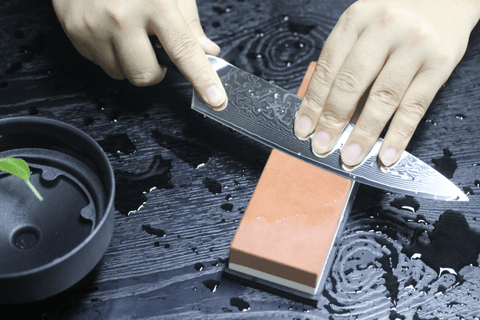
First, ensure that the utility knife is completely clean. There should be no food particles of any kind on the knife. Next, get a sharpening stone and hold the knife at a 20-degree angle to the stone, then move the knife back and forth. Start by sharpening the coarse side, then move on to the fine side. Once you are satisfied with the degree of sharpening, test the blade’s sharpness during the process. You can then clean the knife. Rinse it with water, and finish by applying a little oil to add a layer of protection to the blade.
We do not recommend using automatic sharpening devices, as they usually involve abrasive surfaces that can damage the blade.
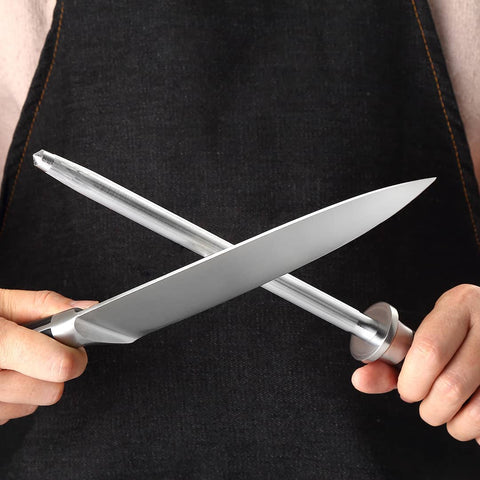
Once sharpened, you can maintain a utility knife's edge by using a honing rod. These are great for removing microscopic particles and keeping the edge even. A honing rod can also help maintain the blade's sharpness, so you do not have to sharpen it regularly with a stone.
FAQs
1. What Is the Difference Between a Paring Knife and a Utility Knife?
A paring knife is smaller than a utility knife. A paring knife's blade is only 3 to 4 inches long because it is primarily used to remove the outer skin of fruits and vegetables. A utility knife is typically between 4 and 7 inches long and can be used to cut a variety of things.
2. What Is the Difference Between a Chef's Knife and a Utility Knife?
Compared with a chef's knife, a utility knife is more compact. Chef's knives are generally 6 to 12 inches long. Chef's knives also do not come with a serrated-edge option, unlike utility knives. The main difference is their size, and a chef's knife is more suitable for larger fruits and vegetables, as well as cuts of cooked meat.
3. How Long Should a Utility Knife Be?
A utility knife can be between 4 and 7 inches long. The ideal length depends on the individual. If you prefer a utility knife that is 5 inches long, then you should choose that length. It all comes down to personal comfort and individual preference.
4. What Other Utility Knives Are Available?
Aside from varying sizes, utility knives also come with different blade-edge options. You can get a kitchen utility knife with a straight edge, or choose one with a serrated edge. As for the material, you can select a knife with a stainless-steel blade or a high-carbon-steel blade. High-carbon steel is much more durable and long-lasting.
5. What Kind of Utility Knives Do Michelin-Star Chefs Use?
Michelin-star chefs use only the best knives on the market, and utility knives are no different. Many chefs prefer knives of Japanese origin because they are made with great finesse and expertise. Japanese knives are generally lightweight and excellent for more detailed and precise cutting. Chefs choose knives that are high quality, have a comfortable weight, are made of durable materials, and are sharp.
6. Do I Need a Utility Knife in My Kitchen?
Absolutely. A utility knife is multifunctional and can be used in a variety of ways. It is an excellent addition to any kitchen. Even if you are someone who only cooks occasionally, having a utility knife at hand will prove extremely useful. If there is one knife you should get for your kitchen, it is the utility knife.


Comments (0)
There are no comments for this article. Be the first to leave a comment!