
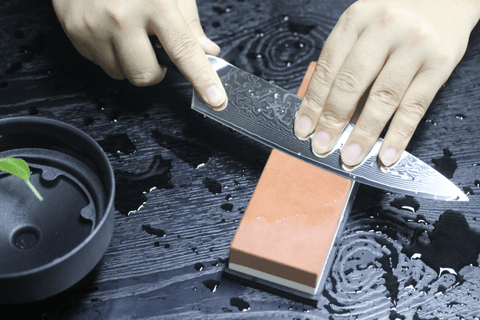

Are you a professional chef or someone who loves spending time in the kitchen cooking different meals? Are you unsure how to use a whetstone? If so, you should be aware of how different kitchen tools, such as knives, can play an important role during the cooking process. If you want to sharpen your kitchen tools perfectly, learning about whetstones can be very useful. We cover everything from how to use a whetstone and more.
What Is a Whetstone?
A whetstone, also known as a sharpening stone, is commonly used in the kitchen to sharpen the edges of all steel tools. As a fine-grained stone, it can sharpen many things, including knives, scissors, and plain blades. Besides sharpening kitchen tools, you can also use a whetstone to sharpen razors, chisels, hand scrapers, and scythes—agricultural tools for mowing grass. Wondering how to use a whetstone the easy way?
Different Whetstone Grits
Whetstone grit refers to the stone’s coarseness. In simple terms, different grit grades are used when sharpening different kinds of tools. The appropriate grit can depend on your requirements for sharpening a particular tool.
1. Coarse (under 1000)
Do you have damaged or chipped knives at home that need repairing? Coarse grit will help you repair the blade easily in no time.
2. Medium (1000 to 3000)
It can be quite a hassle when you want to cut a piece of chicken but your knife won’t do it. Using a medium-grit whetstone will make sharpening your dull knives at home easy.
3. Finishing (4000 and above)
Ranging from 4000 to 8000 grit, this range will help sharpen and finish the knife. A 5000-grit stone is perfect for a finer finish, while 6000 to 8000 grit is suitable for an ultra-fine finish.
Sharpening Stone Pros and Cons
Pros
When you use good-quality sharpening stones, they will give you a sharp, easy-to-use knife blade. Don’t know how to use a whetstone? Here’s some good news: even if you don’t know how to use one, you can easily learn in no time. They are also easy to use and set up, so if you want to quickly sharpen your knife before getting to work, it shouldn’t take long. Moreover, sharpening stones are relatively inexpensive, so you won’t need to set aside much of a budget to invest in them.
Cons
While sharpening stones offer superior results, sharpening your knives with them can take a little longer compared with synthetic sharpening stones. If you want to sharpen your knives the right way, you should know how to use a whetstone.
Moreover, if you don’t have much experience with sharpening stones, they can be tricky to handle because the process requires considerable practice and steady hands. These stones can also wear out over time, meaning you will have to invest in replacements. Some sharpening stones can also be quite expensive, so choose your preferred stone carefully.
Types of Sharpening Stones
When learning how to use a whetstone for the first time, you should know about the different sharpening stones available. The three main types of sharpening stones are:
1. Oil Stones
Among the oldest stones used for sharpening knives and blades, oil stones are artificial stones containing abrasive particles. When these particles are bonded together, they form a stone. When you need to sharpen a knife, you can apply oil to the stone before getting started.
2. Water Stones
Water stones can be natural or artificial, depending on which type you use. As the name suggests, you must lubricate these stones with water when sharpening your knives. They work properly only when lubricated with water.
3. Whetstones
Made with bonded abrasives, whetstones are reliable tools for sharpening knives and blades. They offer a consistent grit size, resulting in more effective and sharper edges than other stones. Read on to learn more about how to use a whetstone.
Different Methods of Knife Sharpening
What should you do if you don’t know how to use a whetstone? You could try the following methods:
1. Coffee Mug
This might sound unusual, but trust us: this method works perfectly. Turn your coffee mug upside down and run your knife across its surface. Keep running the knife over it until you feel that the blade has been sharpened.
2. Sandpaper
If you don’t know how to use a whetstone, you can use sandpaper, which is usually easy to find. Start with a coarse grit when using sandpaper, then continue until the blade is as sharp as possible.
3. The Spine of Another Knife
If you don’t know how to use a whetstone, you can use the spine of another knife as a honing device. Simply run your knife along the spine of the other blade to sharpen it and get back to work.
4. A Manual Knife Sharpener
Also called a pull-through sharpener, a manual knife sharpener can be the easiest and cheapest way to sharpen your knife. Instead of asking how to use a whetstone, you can use a manual knife sharpener. This type of sharpener has two slots: a coarse grit for sharpening and a fine grit for polishing.
How to Choose a Whetstone
If you don’t know how to use a whetstone, you might not know how to choose one either. When choosing a whetstone, consider the cost, quality, number of stones, and grits to ensure you select a good option. If you want a good whetstone, it is recommended that you choose stones with grits ranging from 120 to 240.
How to Use a Whetstone

Step 1: Soak Your Stones
Read on for a step-by-step guide on how to use a whetstone. When working with whetstones, the first step is to soak the stones in water. Leave them in water for a few minutes before use. Soak coarse-grit stones for 15 to 20 minutes, while fine-grit whetstones only need a few minutes.
Step 2: Set Up Your Station
Once soaking is complete, place the whetstone on a towel on the kitchen counter. You can also keep a container of water nearby if you need water during sharpening. Make sure the stone is positioned correctly.
Step 3: Sharpen the First Side
When you begin sharpening, start with your lower-grit stone. Then, place the heel of your knife on the far edge of the stone and gently drag the knife over the surface. Keep moving the knife at the same angle so you can work toward sharpening the tip.
Step 4: Check the Sharpness
After sharpening the first side, make sure to check its sharpness again. Run your thumb across the blade’s edge to feel for the burr from the handle to the tip. If the side is sharp enough, you can move on to the next side.
Step 5: Sharpen the Second Side
Maintain an even angle of 15 to 20 degrees as you start working on the second side. Make sure your hand is firm but gentle at the same time. Continue repeating the strokes until the second side is sharp enough.
Step 6: Fix the Stones
After sharpening both sides, your stones might develop grooves that obstruct sharpening. To fix the stones, use a low-grit stone fixer and push it back and forth to create a flat, new surface.
Step 7: Clean Up
Use the same towel to clean your knife and stones after sharpening. Allow the stone to dry for a day, then wrap the clean stone in a good fabric cloth.
Step 8: Hone and Test Your Blade
Once you have sharpened your knife, you can hone the blade to realign it. Once honing is complete, check the blade’s sharpness as well. You can even try slicing a tomato to see how well the knife works after sharpening. If it slices cleanly through the tomato, it means your knife is as good as new.
How do I Know When to Sharpen my Knife?
If you run your fingertips down the knife blade, the knife should feel sharp along certain edges. If the blade is well-defined with a distinct edge, then you are good to go. However, if the blade feels dull or rounded, you might need to sharpen the knife.
How to Store and Care for Whetstones
Once you have used and cleaned your whetstones, store them in a place where they will be protected from damage. Wrap your whetstones in a cloth and store them somewhere safe in your kitchen.
Alternatives to Using Whetstones
1. Electric Knife Sharpeners
When you use electric knife sharpeners, you can sharpen your knives within a few minutes without difficulty. Electric knife sharpeners are designed to sharpen knives without flaws or breakage.
2. Professional Service
If you don’t have enough time or don’t know how to use a whetstone, professional service may be the best option. With professional service, you won’t have to worry about doing the work yourself; someone else will do it for you.
FAQs
1. Can You Use a Dry Whetstone?
When you use a dry whetstone, it will quickly become less effective and eventually useless. A dry stone also requires more effort during cleanup. When you use a wet whetstone, you can simply wipe everything off.
2. How Do I Polish my Kitchen Knife?
Do you want to polish a kitchen knife at home? Rub the blade with a cloth soaked in white vinegar. Then dry the kitchen knife with a dry microfiber cloth.
3. What are Other Ways to Sharpen my Kitchen Knife?
If you don’t have a whetstone for sharpening your kitchen knife, you can use several other methods. These include using a ceramic mug, hiring a professional service, using an electric sharpener, using sandpaper, and using the spine of another knife.
4. How do I Maintain My Kitchen Knives?
To maintain your kitchen knives, always keep them clean and dry after use. If a knife gets dirty, wash it regularly with warm, soapy water.
5. Can I use Oil with My Whetstone?
If you want to use oil with your whetstone, it can be an excellent and effective lubricant. Using oil as a lubricant will improve efficiency and produce better sharpening results. This is important to understand if you want to learn more about how to use a whetstone.
6. Does a Whetstone Need to be Wet?
The sharpening process will automatically improve when you use lubricants such as water or oil on a whetstone. Compared with a dry whetstone, a wet whetstone helps float away swarf, keeps waste material away, and prevents the stone from clogging.
7. How to Maintain a Whetstone for a Longer Working Life?
Maintaining your whetstone is essential. Proper care will help it last longer and provide better sharpening results. Make sure you sharpen knives at the correct angle, avoid sharpening bulky tools with thick edges, level your stones before sharpening, flip your stone end to end before use, and use enough oil or water during cleaning.


Comments (0)
There are no comments for this article. Be the first to leave a comment!