


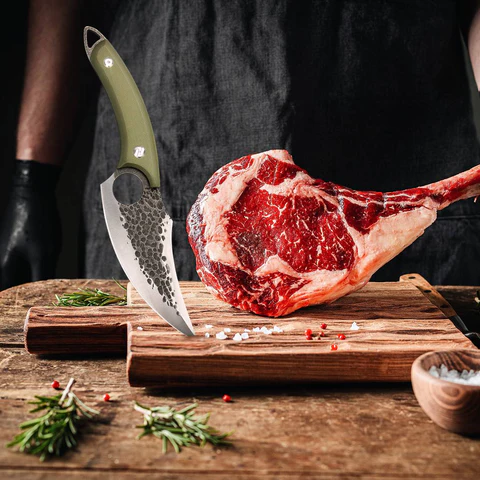


SHAN ZU Camping Knife 6“ | Rhino Series

SHIPPING POLICY
Delivery to Austria, Germany, Italy, France, Sweden, United Kingdom, Netherlands, Spain, Belgium, Cyprus, Denmark, Finland, Greece, Hungary, Iceland, Ireland, Liechtenstein, Lithuania, Norway, Poland, Portugal, Romania, Switzerland, United States.
For the best experience, please use the SHAN ZU website corresponding to your geographic location:
- Europe: www.shanzuchef.com (prices in euros)
- United States: www.shanzushop.com (prices in dollars)
This ensures accurate warehousing, faster shipping, and avoids customs fees.
- We can deliver orders to customers in the above-mentioned countries.
- Delivery time 5-7 business days.
- Please note that all packages are shipped by SHAN ZU, there is no additional tax on our products, which means you only have to pay the final sale price when purchasing from SHAN ZU.
To learn more about the shipping policy.
RETURN POLICY
After receiving the product, please check "if the product is defective" and "if it matches the order content." If any of the above issues occur, please contact us by email: shanzu@shanzuchef.com. We will respond within 48 hours of receiving your return request.
IMPORTANT: For items that arrive damaged or defective, YOU MUST provide photos/videos to support your claim that the item arrived damaged or is malfunctioning. If a customer refuses or fails to send photos/videos of an allegedly damaged or malfunctioning item, this return will be treated as "buyer's remorse" and the customer will be solely responsible for reshipping the item. The customer is also subject to a 15% restocking fee as well as shipping costs paid by the seller. If a customer claims an item is defective/damaged, proof must be provided before returning it, without exception. Use the contact form to submit photos/videos for your return request.
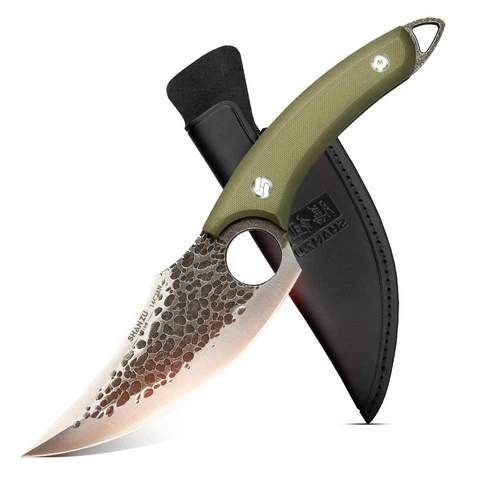
SHAN ZU Camping Knife - Rhino Series
Unleash the power of nature!
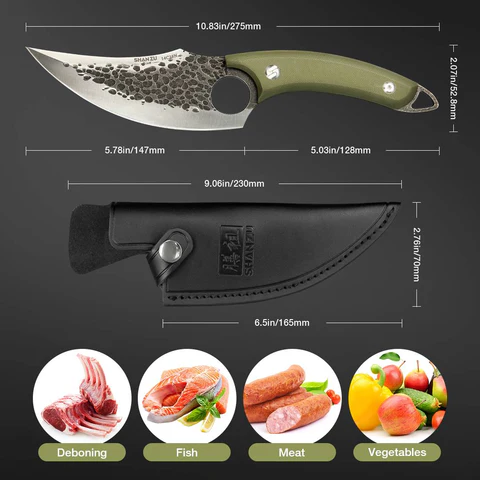
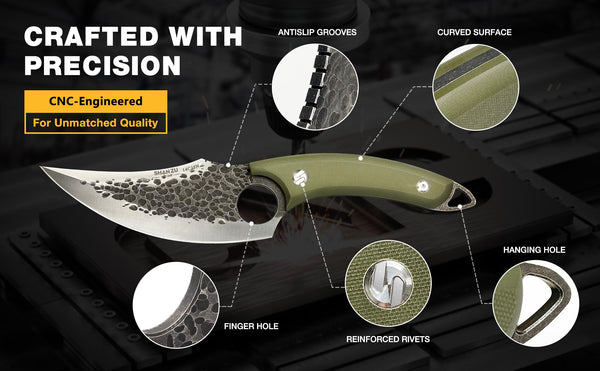
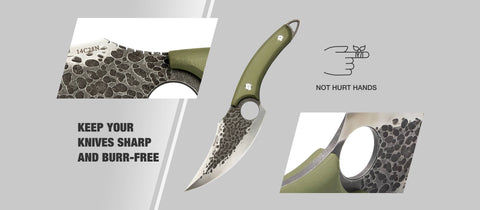
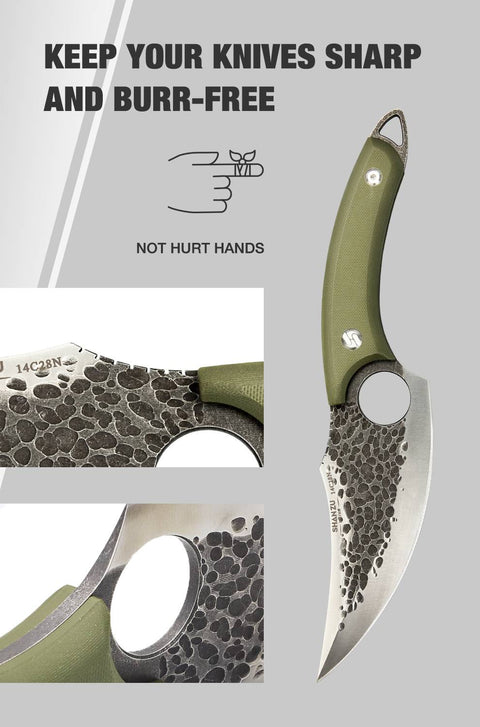
- Blade material: Made from Swedish Sandvik 14C28N steel using advanced CNC technology, the Rhino chef's knife blade guarantees top-notch sharpness and superior rust resistance.
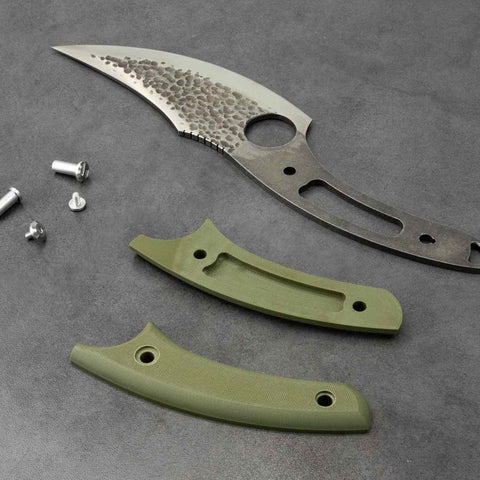
- Handle material: The G10 handle of Rhino camping knives offers both toughness and a secure grip, embodying durability and ergonomic design.
- Full tang construction: The Rhino hunting knife features a full tang, giving it strength and durability.
- Blade surface: Treated with black oxide and stonewashed, the CNC-made blade offers both a protective finish and a rugged appearance.
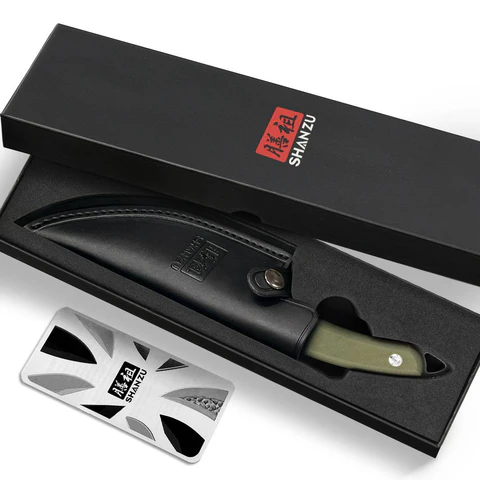
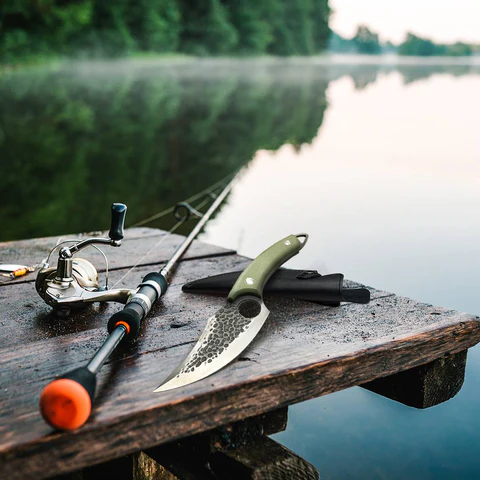
- Easy to carry: Accompanied by a stylish microfiber sheath, Rhino hunting knives are your go-to tool for all your outdoor trips, from forest trails to lakeside campsites.

Embark on the ultimate nature journey with the SHAN ZU Rhino camping knife.
Camping and wilderness survival knives are closely linked, as camping knives are often considered essential tools for wilderness survival.
Versatile tool: Ideal for wilderness survival, the camping knife cuts effortlessly, prepares food, and crafts essential tools.
Fire ignition: Equipped with features such as integrated ferrocerium rods, these knives simplify lighting a fire in the wild.
Compact power: Lightweight and versatile, it is the essential companion for any outdoor adventure.
Couteau de Camping SHAN ZU Rhino
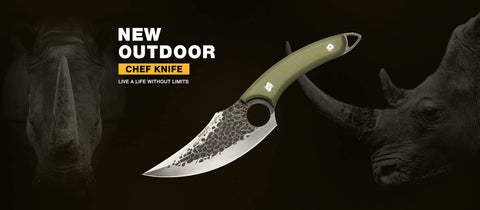
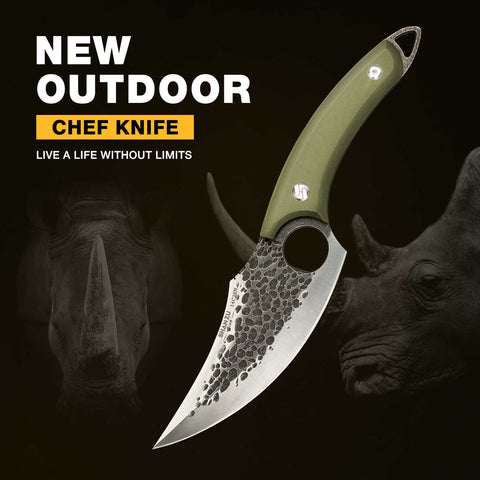
Le rhinocéros, communément appelé "rhinocéros", est une créature puissante et majestueuse qui parcourt la Terre depuis des millions d'années.
Tout comme le rhinocéros, réputé pour sa formidable force et sa résistance dans la nature, le couteau de boucherie Rhino Camping Outdoor se targue d'une durabilité inégalée. Faisant écho à la nature singulière et emblématique de la corne du rhinocéros, ce couteau de chasse offre un tranchant unique pour les aventures en milieu sauvage, garantissant ainsi la protection de tous les amateurs de plein air.

Craftsmanship
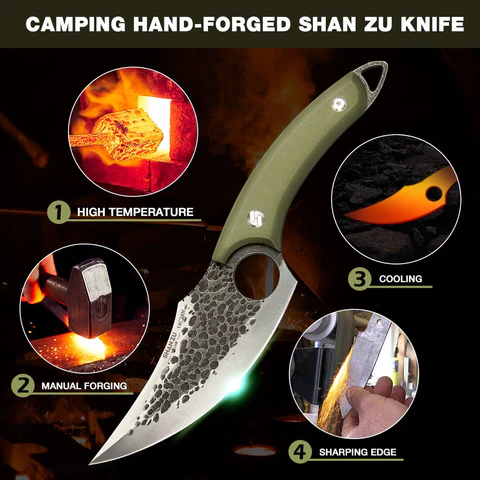
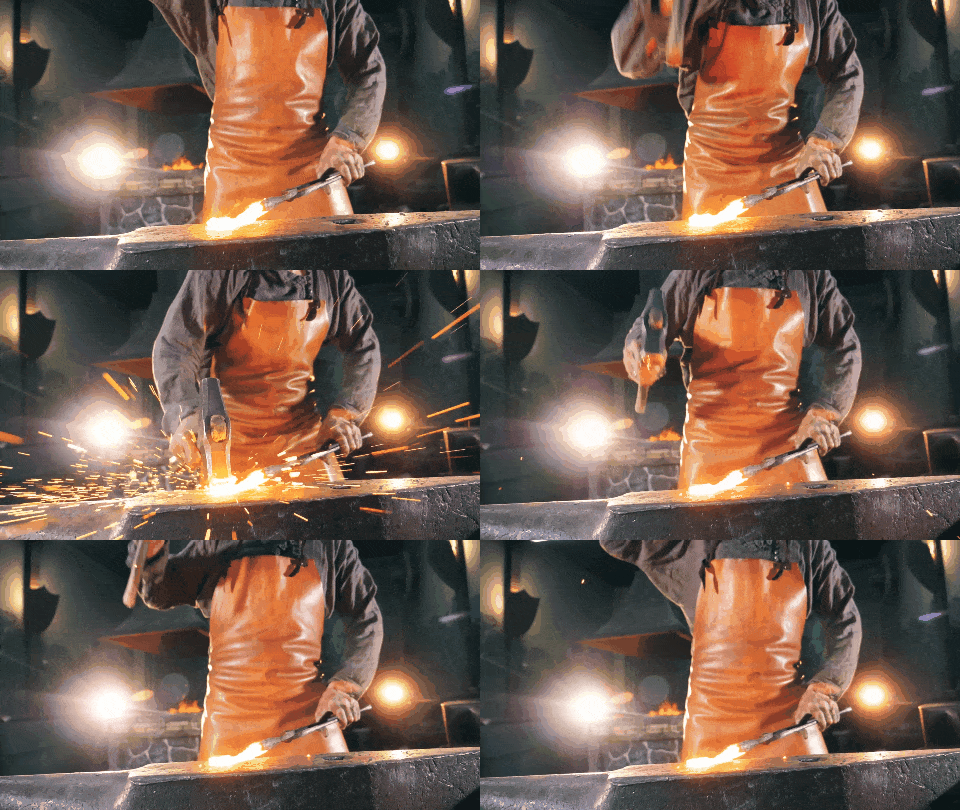
The SHAN ZU Rhino camping knife combines ancient art with contemporary techniques. Made of 14C28N steel, each step, from forging to assembly, reflects the precision and dedication of a craftsman. It offers superior durability and sharpness.
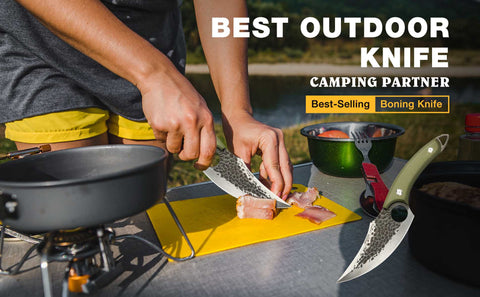
Reliable Rhino Knife
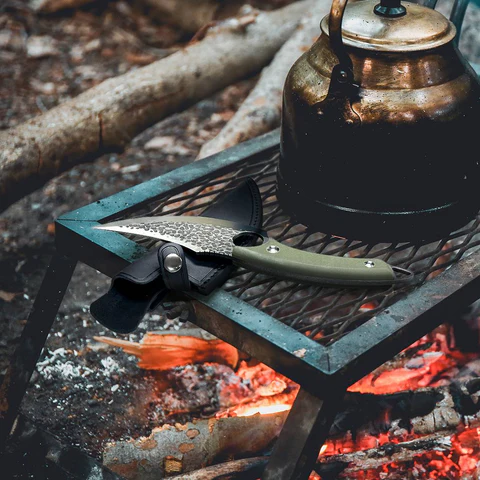
For survival in the wild and outdoor adventures, the Rhino knife is essential. Whether it is cutting ropes, building shelters, or preparing meals, its unmatched sharpness and durability ensure that every task is accomplished effortlessly.

Versatile on the outside
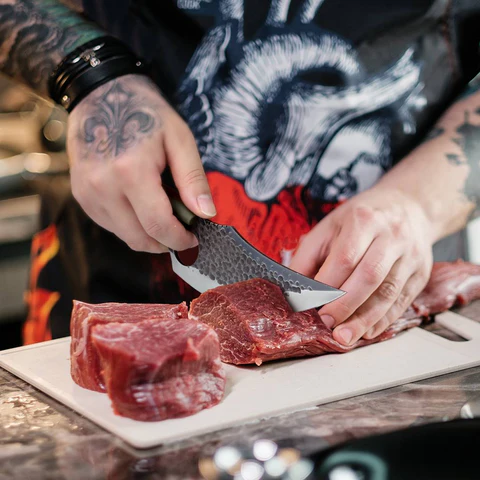
Our outdoor butcher knives come with a delicate sheath. You can hang it on your belt to carry it easily when camping outdoors. It can also serve as a kitchen knife, barbecue knife, camping knife, and many other things!
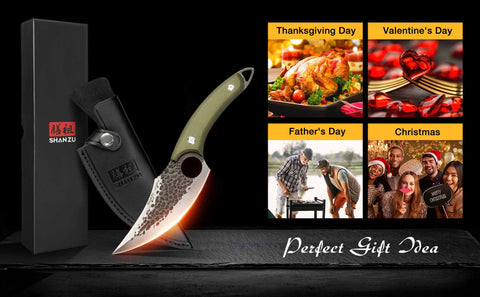
Perfect Gift Practice
🎁 This is an excellent gift. Come make your loved ones happy with a wonderful surprise!
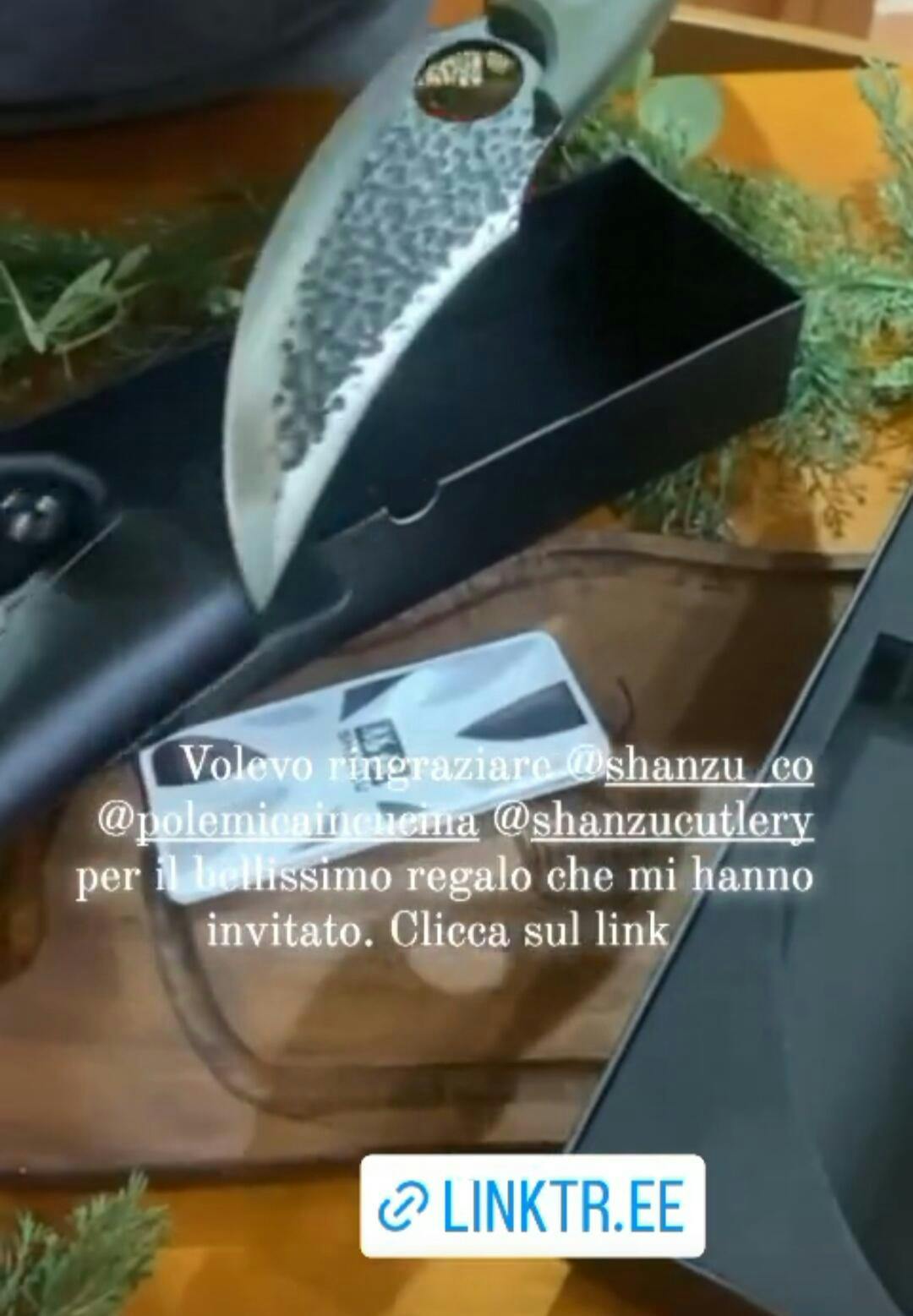
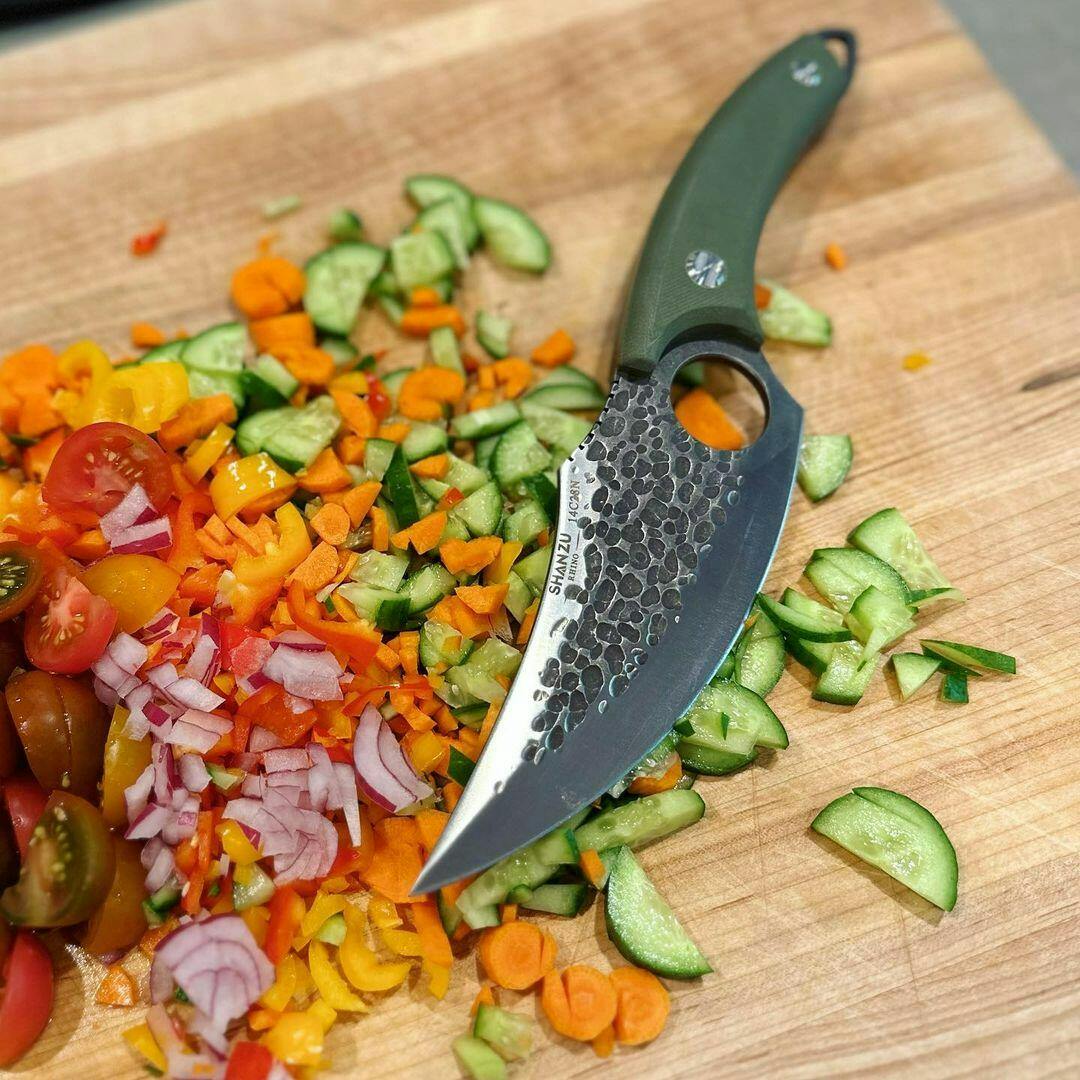
What matters most to you
Free standard delivery for any order. SHAN ZU kitchen knife sold worldwide.
*The following regions are excluded: United Kingdom, Ireland, Australia, Canada, Africa, Middle East.
SHAN ZU kitchen knife sold worldwide.
*The following regions are excluded: United Kingdom, Ireland, Australia, Canada, Africa, Middle East.
The delivery time depends on the destination. In general, it takes between 3 and 14 days. International shipping is possible to most countries. If we cannot deliver to your country, we will contact you. Additionally, we will inform you about your order by sending you an "order confirmation" and a "shipping notification" after you have placed your order.
Returns are accepted within 30 days from the delivery date, in accordance with our refund policy. You just need to send us an email and we will tell you the steps to follow.
Official SHANZU email: shanzu@shanzuchef.com
To clean and maintain your knife, it is best to follow these steps: First, clean the blade with warm water and dish soap. Be sure to rinse and dry the blade thoroughly to prevent rust. Next, use a sharpening steel to hone the blade.
Next, use a sharpening steel to hone the blade. This will help maintain the edge and ensure the knife is in good working condition.
If the blade is very dirty or if food has stuck to it, you can use a soft-bristled brush to gently clean it. After cleaning and sharpening the blade, apply a thin layer of oil to the blade and handle. After cleaning and sharpening the blade, apply a thin layer of oil to the blade and handle to prevent rust and keep the knife in good condition. Finally, store the knife in a safe, dry place, away from heat and moisture. Finally, store the knife in a safe, dry place, away from heat and moisture. A knife block or a drawer knife organizer is a good option, as it will protect the blade and prevent accidents.
To sharpen a knife, you will need a SHANZU sharpening stone or a knife sharpener. To use a sharpening stone, first soak the stone in water for about 10 minutes. Then, place the knife flat on the stone and tilt the blade so that it forms an angle of 10 to 15 degrees with the stone. Using long, steady strokes, move the blade back and forth on the stone, making sure to maintain the blade angle. After a few strokes, move the blade to the other side of the stone and repeat the process. You should sharpen the blade along its entire length, and you may need to repeat the operation several times to achieve the desired sharpness.
What is Damascus steel?
The origin of the name "Damascus steel" is controversial: two Islamic scholars, Al-Kindi and Al-Biruni (circa 800-873 CE), both wrote about swords and sword steels based on the appearance, the geographic location where they were produced or forged, or the name of the smith. Both authors also mention the terms "Damascene" or "Damascus" when describing swords to some extent.
Based on these references, there are three possible sources for where the term "Damascus" comes from in the context of steel:
Al-Kindi calls swords forged in Damascus in Siberia "Damascene," but it is important to note that these swords are not described as having a wavy appearance on the steel surface. Al-Biruni refers to a swordsmith called Damascene who made crucible steel swords. In Arabic, the word "damas" means "watered," and Damascus blades are often described as having a water-like pattern on their surface.
The most common explanation is that the steel is named after the capital of Syria, Damascus, the largest city of the ancient Levant. It may refer to swords made or sold directly in Damascus, or simply to the appearance of the typical patterns, by comparison with damask fabrics, which are also named after Damascus.
What is German steel?
German knives are generally made of stainless steel, with a Rockwell hardness rating between 56 and 58. Stainless steel contains chromium. This lowers the Rockwell rating. The advantage is that the knife blade resists corrosion and rust.
Cooks generally agree that German-style stainless steel knife blades are more durable than Japanese-style blades. Its durability allows you to use it for more cutting and chopping tasks.
The softer characteristic of steel still allows for a sharp edge, but stainless steel will require you to sharpen and hone it more often. Softer steel also makes blade sharpening easier, although a stainless steel blade means a German knife will lose its edge faster than its Japanese counterpart, which is made of high carbon steel.