

A high-quality collection of knives is among the most important tools in your kitchen. Good blades make food preparation much easier and safer. It is not uncommon for a kitchen to have several different knives for different types of cutting. One of these knives is the cleaver, which can be extremely dangerous in an inexperienced hand. A few key factors that determine whether a knife is safe are the shape, weight, and sharpness of the blade. When it comes time to purchase a new cleaver knife for cutting meat, fish, vegetables, and more, learn everything you can about choosing and using the best cleaver knife first.
What Is a Cleaver Knife?
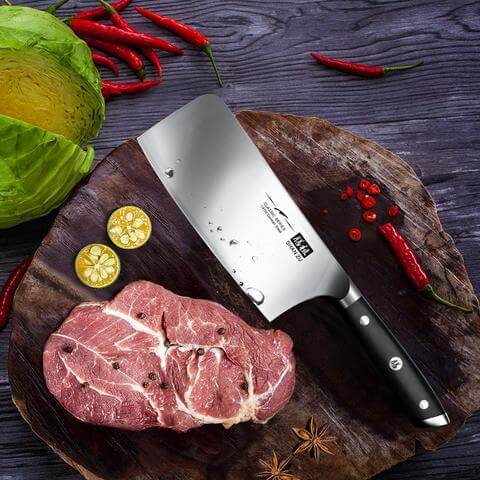
A cleaver knife is a kitchen tool used to chop or slice food. Cleavers are traditionally used in commercial kitchens and butcher shops, but they are also common in many homes. These knives typically have a heavy blade with an offset handle. They vary in size, but most average ten to twelve inches in length. A cleaver knife is the best choice when you need to slice through tough foods like large cuts of meat or hard vegetables like squash. They are also quite adept at handling softer foods for your favorite recipes.
The Benefits of a Good Cleaver
As one of the largest blades in your collection, a cleaver has a big job to do for a wide variety of dishes. It can handle butchering meat, cutting tough vegetables, and even more delicate jobs like mincing garlic. It offers some versatility but also more specific advantages over other knife styles.
Why Do You Need a Cleaver in Your Kitchen?
Have you ever watched one of the popular TV cooking competitions and wondered why the contestants use a cleaver? Many people do not know that a cleaver is an essential kitchen tool. It can be used for cutting meat, vegetables, fruits, and more. Smaller knives cannot always cut through these items like a cleaver can.
Consequences of Using a Bad Cleaver Knife
Anytime you use a bad knife of any variety in the kitchen, your work becomes harder and you increase the chance of accidents and injury. A lightweight cleaver will not cut easily through meat or tough vegetables and necessitate greater force on your part. A dull cleaver may skip or slide across the food and cut your hand instead. It is always important to use the right knife for the right job.
Types of Cleaver Knives
Choosing the right cleaver knife is important to ensure the best quality of cut. There are different types of cleavers that are available for purchase, each being used in different ways. More durable cleavers are best for meatier cuts but require more work, while delicate knives are better for things like fish and veggies. The size of the blade will also come into play when choosing which knife to buy.
Meat Cleavers
A meat cleaver is a tool that is used in the kitchen to chop through large pieces of food. The cleaver can be used to cut bones, cartilage, and sinews as well as handle softer pieces of meat. It is frequently used to split roasts and poultry and can handle beef, pork, and fish with ease.
Chinese Cleavers
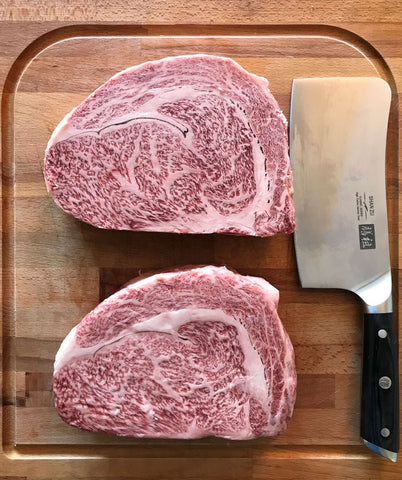
Chinese cleavers are large knives typically used in Chinese cuisine, but they suit all types of cooking at home. They have a rounded edge and a wide blade with gentle curves. The weight of the blade can create a lot of force for handling tough foods, but can also create thin slices of meat or vegetables with the utmost care and control. You will find yourself using one of these knives every day for chopping, slicing, dicing, and mincing vegetables, fruits, herbs, garlic, and every other ingredient in your favorite dishes.
Vegetable Cleavers
There are a number of benefits to owning a vegetable cleaver, from the ease of chopping carrots, onions and celery to the delicate, even slices you can create with softer produce like tomatoes.
How to Pick the Best Cleaver Knife
Picking the best cleaver knife can be tough, especially if you do not know what to look for. While every kitchen goods store has an option, it is important to look at specific characteristics in order to choose one that works best for you.
Sharpness
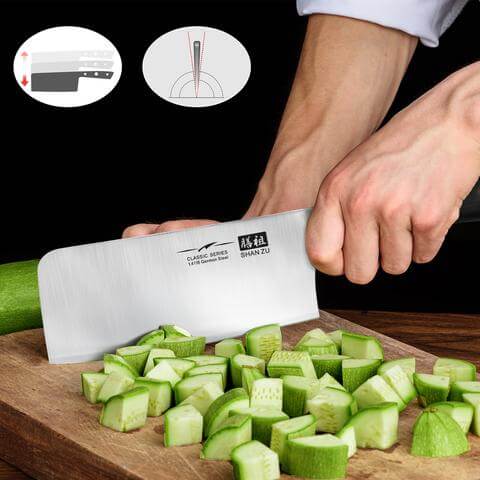
Too thin or too thick and your cleaver knife will not perform properly. The hefty structure of this type of blade requires some weight behind it in order to chop through hard vegetables or butcher meat effectively. Choose one with a well-honed edge that gradually tapers to a medium-weight blade. Remember that a duller blade is more difficult to use and raises risk of injury in the kitchen.
Material
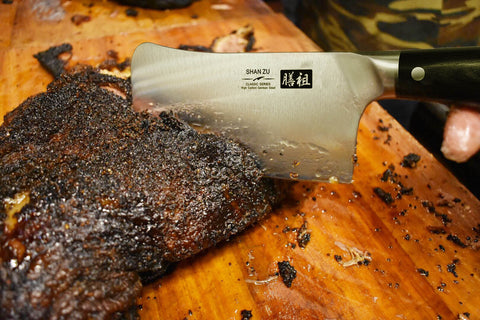
The most common materials for cleavers include high-carbon steel and stainless steel. The former offers long-term sharpness so you do not have to maintain the knife as frequently. Stainless will generally last longer as it will never rust and will not affect the taste or chemistry of the food you use it on.
Cleaver Design
Although all cleavers are generally rectangular, with a broad, heavy blade and an offset handle, there are subtle differences that can make your kitchen experience better.
Blade Length
Extra-small cleavers exist, but they do not provide the cutting or chopping power expected from such a large knife. Choose one with a 7-to-8-inch blade instead. Larger ones also exist, but they are harder to handle because of their weight and potential balance issues.
Blade Thickness
As mentioned above, the thickness should not exceed ¼ inch, but the most important characteristic when choosing your new cleaver is the size and angle of the cutting edge at the bottom. These can range from about 12 to 25 degrees and affect how easy it is to cut into any ingredient.
Blade Weight
The blade's length partially determines its weight. After all, a larger mass of steel weighs more. Some cleavers can weigh up to two pounds, which is considerable for the average person to wield when cooking a roast or chopping up a chicken at home. The best way to determine what works for you is to pick up cleavers of different weights and see how they feel in your hand.
Comfortable Handle
As much attention goes into designing a cleaver's handle as its blade. Choose wood, stainless steel, or another material based on how it feels against your skin and the grip's size and shape.
How to Use a Cleaver
A cleaver is a versatile kitchen tool that can be used for cutting, slicing, and chopping. It is the perfect tool for cutting through tough meats, vegetables, and fruits. No matter which type you choose to purchase, the most important thing is learning how to use it effectively.
Setting Up the Cutting Board
This process is as simple as placing your cutting board on the kitchen counter in a convenient location. Make sure it is large enough for the piece of meat, fish, or vegetable you intend to chop and that it will stay in place without shifting or sliding during the process.
Choose Your Plan of Attack
It is important to know where and how to cut when butchering a piece of meat or cleaving a large squash into pieces. Never begin without a plan.
Power Grip Tips for Chopping Meat
Grasp the cleaver's handle firmly with your palm over the top for better control. You can use the flat of your other hand to press down on the cleaver's top for more force.
Get Ready, Get Set, Cut
You may need a bold chop with momentum to get through a difficult joint or bone. A cleaver may also come in contact with the food before you apply force downward to make the cut. Every move is carefully planned and executed to minimize the risk of injury.
Slice Twice if Needed
No matter how good your cleaver knife is, it may not go all the way through a large gourd or roast the first time. Plan and execute a second cut if needed.
Use a Cleaver for Vegetables
Although most people associate a cleaver knife with meat, it is also a great tool for cutting vegetables. This is especially true for large, tough varieties, but they are versatile enough for more kitchen tasks as well.
Crush (Garlic or Ginger)
Lay a garlic clove on your cutting board. Settle the flat side of the knife blade on top and push down hard to crush it. Remove any remaining skin and mince the remaining garlic if needed.
Slicing and Chopping
Use a cleaver knife as any other type of kitchen blade to chop, slice, or dice vegetables into whatever shape and size you need for your favorite recipe.
Transferring
Use the width of the cleaver blade similar to a spatula to transfer chopped vegetables to a pan for cooking. Be very careful to keep your fingers away from the sharp edge.
Use a Cleaver for Meat and Fish
Besides chopping through joints and bone and cutting up large cuts of meat, you can also use a cleaver for more delicate operations.
Mincing
Grip the cleaver handle firmly. Stabilize the blade with your opposite hand's fingers or palms. Lift the back edge of the cleaver and chop it through the meat in a back-and-forth motion to make small pieces.
Slicing
Use the end portion of the cleaver blade to make even slices through boneless meat the same way you would use any other kitchen knife. You can also make horizontal slices with your palm carefully on top of the meat and the blade moving through the thick cut underneath.
Tenderizing
Pound tough meat with the blunt side of the cleaver blade until it is appropriately tenderized. For best results, do this in two different directions with and against the meat grain.
Scaling Fish
Just as you would with any other blade or fish scaler, scrape the scales off with the cleaver held at a slight angle. This helps prevent cutting the fish itself during the process.
How to Sharpen a Cleaver Knife
Cleavers are prized kitchen tools because of their versatility. You may wonder whether yours is sharp enough to get the job done properly. The good news is that sharpening a cleaver is a quick and simple task, so you can cut through anything with ease. (https://www.allrecipes.com/article/honing-vs-sharpening/)
Why Do We Sharpen Knives?
Sharp blades are safer than dull ones. While this may seem counterintuitive, it is important to understand in the kitchen. A sharp, well-maintained blade cuts easily through meat or vegetables and requires less force to stay where you want it. Preparing ingredients is also much less labor-intensive when your tool is in top condition.
What Makes a Knife Dull?
Every time you use a knife, meat, vegetables, and the cutting board create friction against the blade's edge. Over time, this wears down the material and makes it dull.
Honing vs. Sharpening a Knife
If your knife is already sharp, honing keeps it that way. It is a maintenance technique that preserves the edge angle. Sharpening a blade is done less frequently. It involves grinding away part of the knife's material to restore the edge.
What Angle to Use
Although different knives have different angles and chefs have different opinions, a cleaver generally has an approximately 25-degree edge on each side. It is important to keep this angle even so that the blade chops or slices through food properly.
How Often to Sharpen a Knife
If you hone your blade frequently, you should not need to sharpen it more than once or twice a year. Of course, this depends largely on how often you use the kitchen cleaver and what foods you use it on. Mincing garlic or slicing vegetables will not wear down the edge as much as chopping through bone.
Testing Blade Sharpness
Most people realize their cleaver blade is dull when it no longer slices, chops, and dices easily. However, it is important to hone the blade regularly to keep it working well. One simple test to determine whether the cleaver needs sharpening uses a piece of paper. Hold the paper up in the air and try to cut it with the knife. If you cannot, it is time to sharpen the blade.
Using a Whetstone
A whetstone, or sharpening stone, has a slightly rough surface that grinds the edge down at the proper angle. Whetstones are a smart alternative to electric sharpeners because they remove much less metal from the knife than other options. This can help create a smoother edge and extend the lifespan of your cleaver.
Using a Honing Rod
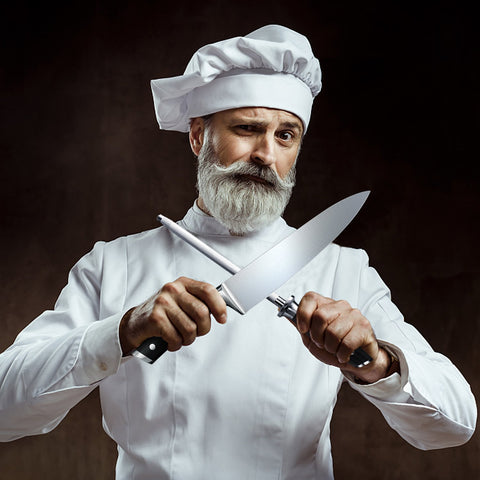
These long, rough metal rods are used regularly to maintain a proper edge. Hold the blade so the sharp edge faces down at a fifteen-degree angle, use only very light pressure, and run the whole length of the blade over the honing rod repeatedly.
Using a Dinner Plate
If you have porcelain dinnerware with an unglazed edge on the bottom, you can use it to hone your cleaver knife blade. Set the plate or bowl top down on a non-slip surface and run the edge at the appropriate angle across the porcelain. Be careful not to damage your dishes during the process.
Shan Zu Cleaver Knife Recommendation
Choose a high-quality kitchen cleaver knife when you reach for the Shan Zu brand. These powerhouse blades can handle your meats and vegetables with ease. The three options all offer comfortable handles and appropriately heavy weight, plus a thick spine for mashing garlic and an ultra-sharp German stainless steel blade. They are balanced to exacting standards so every at-home chef can prepare favorite recipes like a pro.
Frequently Asked Questions
What is the difference between a meat cleaver and a Chinese cleaver?
Classic meat cleavers are much heavier and are used primarily for tough meat, bones, and joints. Chinese cleavers are lighter in weight with thinner blades. These offer great versatility for boneless meat, vegetables, fruit, and other applications in the kitchen.
What is the difference between a butcher knife and a cleaver?
Although many sources call a cleaver a butcher knife, and they are commonly used for butchering pieces of meat, they do have some differences. A traditional butcher's knife has a much longer and narrower blade with a curve at the end. It is truly only suitable for cutting up large cuts of meat.
How thick should the blade of a cleaver knife be?
Even though a cleaver knife is intended for heavy work in the kitchen, that does not mean it should be dull and force you to power through bones and joints with force alone. The thickness of the blade should stay below or around ¼ inch in thickness.
Why is there sometimes a hole at the top corner of the blade?
The hole at the end of a cleaver serves no other purpose than to hang it up for storage. These heavy, very sharp knives cannot fit in a regular knife block and would do a lot of damage in a drawer. The hole makes it easy to hang the cleaver out of the way behind your cutting board or kitchen counter.


Comments (0)
There are no comments for this article. Be the first to leave a comment!