

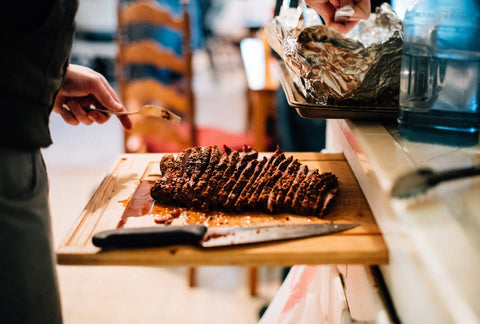
Brisket is one of the benchmarks of barbecue. Making brisket is a lot of work that can easily take anywhere from four hours to a full day. Undoubtedly, it is hard work, but the juicy result is worth the time you invest. However, all that hard work can go to waste if you fail to cut the brisket properly.
If you’re looking for easy-to-follow techniques for cutting brisket, you’re in the right place. This article will take you through the crucial steps to help you cut brisket perfectly while increasing your knowledge so you can do the job better.
Without further ado, let’s get started!
Why Is It Essential to Slice Brisket Properly?When preparing brisket, many people think cooking is the only important part and overlook the importance of cutting it; unfortunately, this results in chewy brisket.
A proper cut is a deciding factor in whether brisket is tough or tender. If you do not cut brisket properly, the meat will become chewy no matter what you do.
What You Need to Know About Slicing Brisket- · Brisket Fat Content
A brisket’s juiciness and flavor come from its marbling, which is also a factor in assessing its quality. To increase its juiciness and overall flavor, you can leave about 1 inch of fat on the outside of the brisket before cooking it. Use a sharp knife to trim away excess fat while the brisket is still cold.
- · Brisket Point
A brisket consists of two main muscles, one of which is the point. It is the other half of a whole brisket, called a “full packer.” The brisket point is thicker and looks like a traditional lump of meat that tapers at one end, which is why it is called the “point.” Although it is thicker, it is smaller overall. It adds extra flavor to the brisket while yielding less meat.
When purchasing a brisket, you can choose whether to buy both muscles separately or keep them together as a whole. The brisket point has more connective tissue and fat than the brisket flat. Therefore, the point is usually shredded rather than sliced because of its higher fat content. This makes it easier to chew while leaving a beautiful texture on the surface, especially with fattier cuts.
Another name for the brisket point is the “deckle.” It is the thick, fatty, muscular layer attached to the brisket’s rib cage; the point is the muscle itself.
- · The Fat Cap
Brisket comes from the animal’s chest, where the side facing the skin is covered with a thick layer of fat. This fat is commonly known as the fat cap. It is the side completely covered with fat. The fat cap is usually about 1 inch thick, with the exact thickness depending on the animal’s health and how it was butchered.
Choosing the Best Brisket for Smoking· Beef Grades
To begin with…
There are generally two qualities of brisket to choose from "Choice" and "Select" depending on various factors like the quality of butcher or supermarket. Choice is a higher quality of brisket than Select. The visible difference between the two is the marbling of fat, which gives flavor to the brisket. Hence, a higher-quality brisket, i.e., Choice, is recommended. Although Choice is slightly more expensive than Select, the result is worth the investment.
· Size MattersThe next thing you need to be careful about when purchasing a brisket is the size. Generally, a brisket is cut as small as two pounds or as large as 14 pounds. But in some cases, you might not need a big serving. To avoid purchasing more than you need to follow the universal rule of purchasing half-pound brisket per person.
Nice Looking Fat You've Got There!
Because every cut is different, looking at the meat carefully is recommended to ensure getting a good package. Here's how you need to check the fat content and marbling of the brisket.
Look for the uniformed thickness throughout the flat edge at the bottom.
Carefully estimate the pointcut to check if the fat is evenly marbled. It is essential because an uneven brisket fat gets dry in spots.
A Quick Note on PriceNobody can tell the exact price of a good quality brisket because it varies on the time of the year, cost of the gas/feed, a place where you live, etc. however, it is estimated that brisket should cost you between $2 to $22 per pound.
What Do You Need Before You Slice?- A well-rested brisket
- A brisket slicing knife
- Large butcher's block/Cutting Board
- Trash Bowl
- Patience
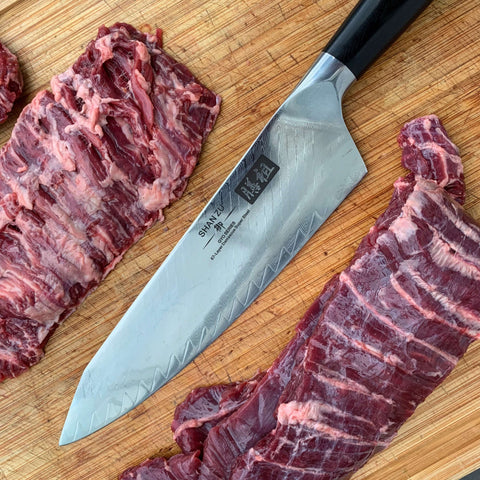
A sharp knife with a long blade is required to generate smooth and even cutting in the most challenging piece of flesh. It is not required to purchase a more expensive knife; a 12-inch sharp knife will work.
When using a knife in the kitchen, it's common practice to curl the knuckles of your guide hand to avoid accidentally cutting your fingers. In the case of brisket, things are different. When slicing brisket, you'll need to use your guiding hand to help shape and preserve the meat. Always be aware of where your fingers are at all times and exercise caution.
Now that you know all the necessary detail about brisket, let's unfold the ultimate answer to the most problematic question, "How to cut brisket."
Trimming a Raw Brisket· Examine the brisket for redness and moistness.
Coming to the central part of handling the brisket, understanding your brisket is the essential and most crucial step. When purchasing your brisket, try to grab a flat cut for a slice of leaner meat that's better for slicing or a pointcut for a fattier, more flavorful cut that's best for shredding.
Make sure the brisket has a nice red color because your aim here is to enjoy a little damp and juicy brisket when cooking.
· Cut the fat cap off in sections with a sharp slicing knife.
In case you don't know, the fat cap is the layer of fat that rests against the point side of the meat. Some people prefer to remove it entirely, while others prefer to leave about half an inch to one inch of fat on the meat.
To remove the fat cap completely, divide the meat into sections. Slip your knife under the fat and slide it back and forth until the section comes off.
To trim the fat cap slightly, cut only the upper part of the fat in the thickest sections. It is recommended to leave the fat cap on when smoking the brisket.
· Trim off the small pieces of fat on the underside of the flat cut.
The flat cut has a lot of fat on one side and smaller pieces of fat on the other. This is also found in a whole brisket. Trim away any small pieces of fat that may prevent the meat from absorbing flavor.
Place the tip of your knife under the edge of the fat. Push the knife underneath, then move it back and forth while sliding it outward to cut the fat away.
· Cut through the fat seam between the point and flat cuts on a whole brisket.
If you have a whole brisket, which includes both sections, there will be a substantial layer of fat between them. You do not need to remove the layer completely, but removing some of the fat is essential.
To do so, start at the outer edge of the fat seam and cut away small pieces of fat. Trim the fat until the meat is visible. This will allow you to lift a piece of meat and season the middle.
Finding the Grain of the Cooked Brisket· Examine the meat to find the grain on a flat or point cut.
Place the brisket on a cutting board to examine it. The grain is the pattern formed by the muscle fibers running through the meat. It resembles long strands of rubber bands. You can see these lines on the surface of the meat.
· Check the grain in two directions when working with a whole brisket.The grain runs in different directions in the flat and point cuts when using a whole packer brisket. It is fine to separate them as soon as you finish cooking.
If not, cut along the flat against the grain until you reach the point. Then raise the two sections and slice them apart to separate them.
Another option is to cut the flat against the grain. Then raise and rotate the meat 90 degrees, slicing both pieces at a 45-degree angle against the grain.
· Turn the meat so your knife is perpendicular to the grain.To enjoy tender bites of meat, you must cut against the grain. Once you find the grain, position your knife so that you slice against it.
To avoid making your brisket tough to chew, turn it over and cut the rubber bands holding it together. This will divide the brisket into smaller pieces that are easier to handle when eating.
Slicing the Cooked Brisket· Rest the cooked brisket for 20 minutes to 24 hours before slicing it.
Keep in mind that letting the meat rest for at least 20–25 minutes after cooking is essential. This helps keep the brisket juicy.
If you want thin slices of meat, it is better to wait at least 24 hours so the brisket is completely cold when you cut it.
· Use a long serrated knife to slice the brisket.Although you don't need to use a serrated knife (the one with points along the edge), it is recommended for the best results. The small points along the edge of the knife will help you slice through the brisket more easily.
Look for a knife that is 8 to 10 inches (20 to 25 cm) long. With such a knife, it will be easier to slice the brisket in one motion.
· Use short strokes to slice across your brisket against the grain.
It's not possible to slice across the entire piece in one stroke, so don't try. Instead, use a sawing motion and work your way from top to bottom.
Start at one end and work your way across at an angle to cut off a slice if your piece of meat is large.
· You can also trim off excess fat as you go if you like.
Aim for slices about as thick as a pencil.
If the brisket seems tough, slice it thinner, but this measurement is an excellent starting point. Try slightly thicker slices if it is falling apart.
COMMON Q&A· How to Cut a Whole Brisket?
- Cut the meat in half to separate the flat and point.
- Now trim the small pieces from the underside of the flat to avoid losing flavor.
- Then cut off the tips of the brisket to avoid affecting its overall appearance.
- Now position your knife to cut across the grain of the meat at a 90-degree angle.
- In the final step, slice your brisket with a sharp knife.
· How to Cut Brisket in Half?
To cut the brisket in half, we recommend using a boning knife. A boning knife makes it easy to cut through the fat layer between the flat and the point. Follow the fat cap slowly so you don't nick the flat excessively. This is the most significant sacrifice you'll make during the process.
· How to Slice the Flat?- Start by cutting your brisket in half. This will help you separate the flat from the point.
- Now slice the brisket flat against the grain.
- When finished, rotate the brisket 90 degrees and slice it in half.
- Now slice the brisket point against the grain, and you're done.
- Start by cutting your brisket in half. This will help you separate the flat from the point.
- Now slice the brisket point against the grain.
- When finished, rotate the brisket 90 degrees and slice it in half.
- Now slice the brisket flat against the grain, and you're done.
Whether you serve the brisket flat shredded or sliced, about half a pound per person will be enough for the main meal unless they are big eaters. Fit, hungry teens and athletes should get up to 1 lb. per person.
If shredding the meat and putting it in a sandwich, allow 4 oz. That will be enough for most people, while around 6–8 oz. will satisfy those with bigger appetites.



Comments (0)
There are no comments for this article. Be the first to leave a comment!