
What Is a Paring Knife?
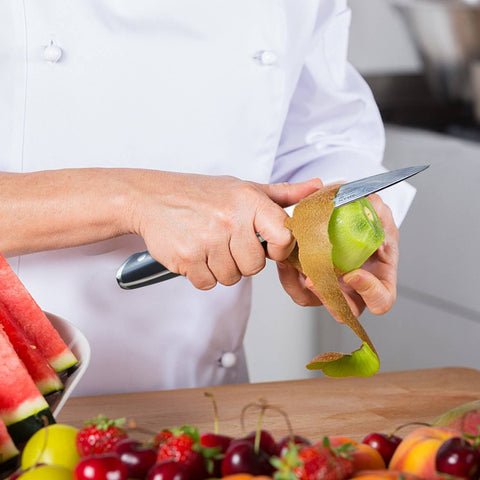
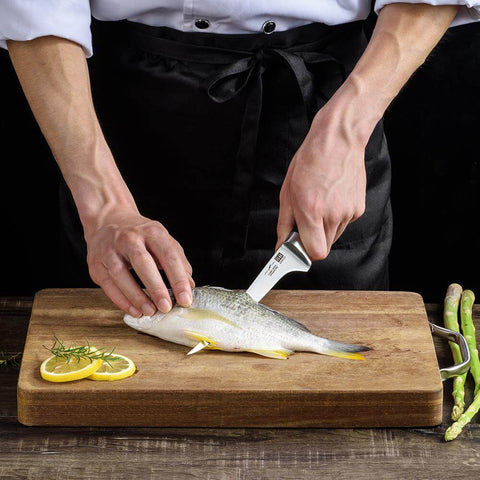
Knives deliver powerful cuts, but they can also be used for delicate, detailed work in the kitchen. Chefs use a wide variety of knives for different purposes. One knife that every chef carries is a paring knife. It can be considered the baby of the knife family because of its size. Many people describe a paring knife as a small, miniature version of a chef's knife used for intricate, detailed work.
A paring knife has a small blade measuring between 2½ and 4 inches long. It is compact and can be used for a variety of purposes.
The Importance of a Paring Knife
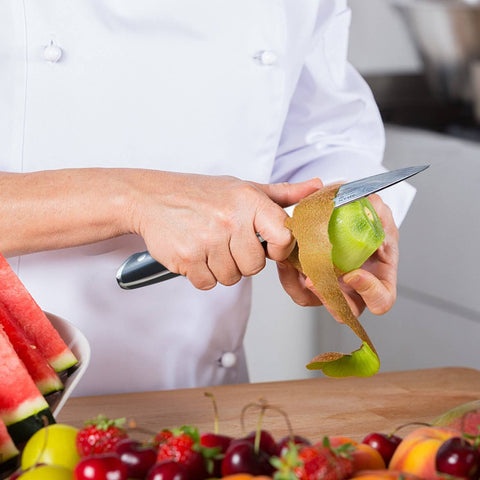
A paring knife is ideal when subtle touches and precise cuts are required. It can't and should never be used for heavy-duty work. Other knives are designed for that purpose. So, what is a paring knife used for? It can be used to devein shrimp and to cut and peel small vegetables such as garlic. While a chef's knife can handle many garlic-peeling tasks, this is where a paring knife comes in handy.
It is by far the smallest knife found in the kitchen. However, don't let its size fool you. Its importance lies in performing delicate, detailed tasks that larger knives can't handle. Paring knives are also ideal for deseeding small fruits and mincing small ingredients such as garlic or dried herbs.
One major benefit of a paring knife is its versatility. It can be used for many tasks, from coring, peeling, and segmenting to removing stems. You can practically peel an entire fruit or vegetable in one go with a paring knife. Its sharp blade does the work for you; you only need to maintain a slight cutting angle and keep your thumb on the blade.
It can be used either while holding the fruit or vegetable in your hand or on a cutting board. The knife's small size provides ample control and cutting precision, minimizing the risk of cuts that can occur with a large blade.
What Is the Difference Between a Paring Knife and a Chef's Knife?
A paring knife is a small, miniature version of a chef's knife. However, it serves different purposes and is used for different kitchen tasks than a chef's knife. The first difference is appearance. A paring knife has a small blade measuring between 2½ and 4 inches, whereas a chef's knife is larger.
Each blade, size, and shape is designed for a specific purpose when it comes to knives. The narrow blade and small size make a paring knife ideal for peeling small fruits, deseeding fruit, coring apples, and other delicate tasks. A chef's knife has a curved blade that makes it easy to rock back and forth on the cutting board. It is ideal for chopping and dicing a wide variety of vegetables or meat. It can be used for almost anything except delicate, detailed tasks involving small ingredients.
What Types of Paring Knives Are There?
Spear-point/spear-tip paring knife
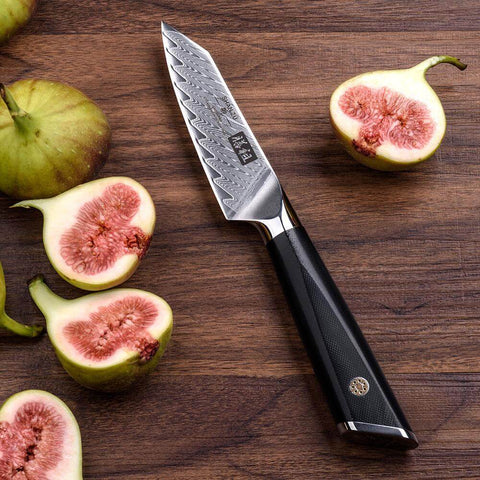
The spear-point knife is known as the classic paring knife. It has a short, outwardly curved blade. In the words of chef Gordon Ramsay, this outwardly curved blade allows the knife to do the work. All the user needs is a proper grip and gentle pressure on the blade. This way, the knife does the work without requiring the chef to exert too much pressure. Therefore, it is important to use a light touch when using a spear-tip paring knife.
A spear-tip paring knife is mostly used for coring fruits and vegetables. It is also used for peeling and slicing. Overall, it is a highly functional, multipurpose knife.
Bird’s-beak paring knife
As the name suggests, a bird’s-beak paring knife has a sharp tip and a concave, sickle-shaped blade. Have you ever seen fancy salads with fruits and vegetables cut like works of art? This knife is one of the main tools behind that delicate, detailed work. It is also used for trimming, peeling, and coring fruits and vegetables. One of the most valued advantages of a bird’s-beak paring knife is its rounded blade, which reduces waste while peeling.
Sheep’s-foot paring knife
A sheep’s-foot paring knife is ideal for julienne cutting. Its blade is straight with a rounded tip, so only the main part of the blade touches the board during chopping. This makes it easier to achieve uniformly thin slices of vegetables or herbs. A sheep’s-foot paring knife stays sharp for a long time and can also be used to cut soft and hard cheese. One disadvantage of this knife is that it lacks the sharpness found in other styles of paring knives.
Western-style Japanese paring knife
The Western-style Japanese paring knife has a spear-like shape and a less-curved blade. It is ideal for garnishing, intricate cutting, and carving, as its shape allows for better grip and control of the knife. On the downside, this knife is quite expensive and has an extremely sharp blade.
Serrated paring knife
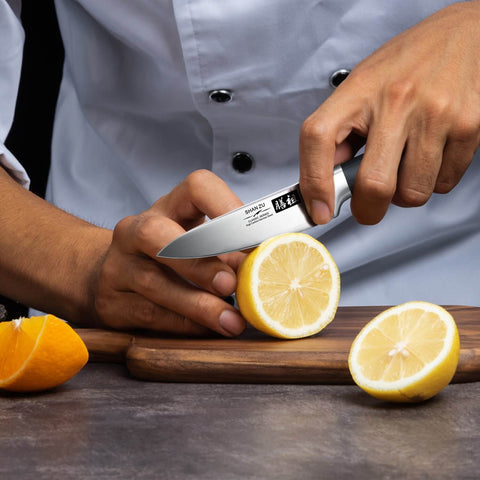
A serrated paring knife uses a sawing motion, making it easier to slice through the tough skin of citrus fruits without damaging the flesh. You can also slice tomatoes of any size to your liking. Additionally, a serrated paring knife is ideal for trimming cake edges and evenly slicing chilled dough.
How to hold a paring knife?
The correct grip is essential for holding a paring knife and using it to its full potential. A firm grip helps you maintain complete control of the blade. Paring knives are small and designed to fit comfortably in the human hand. Whether you’re holding the knife in the air to peel or cut, or using it on a cutting board, a well-directed grip is key. Ideally, use three or four fingers on the knife handle and leave your thumb free to rest on the item you’re cutting.
Additionally, hold the knife so that the pointed end of the blade is directed toward you, not away from you. Make sure you have complete control of the blade so that you can move the knife as needed.
What do you use a paring knife for?
Many people ask what a paring knife is used for, and the answer is: far too many things. Let's look at some of the most popular uses for paring knives.
Coring and peeling tomatoes
Coring tomatoes is easy with a sharp paring knife. Insert the sharp tip into the core at a slight angle, about one inch deep. Run the blade through the entire core using a sawing motion. This creates a conical cut, allowing you to pop the core out easily.
A paring knife can also be used to make an X-shaped cut in the bottom of tomatoes before boiling them. Once they are boiled, use the cuts to peel off the skin, starting at the X.
Deveining shrimp
Use the paring knife to make a shallow cut along the back of the shrimp. This will expose the vein. Then use the pointed tip of the knife to remove it. Deveining shrimp is easiest with a paring knife and can be done in under a minute.
Thinly slice garlic
A paring knife is ideal for slicing delicate, small items like garlic. Simply stick the end of the blade into the clove and twist the knife. As the knife twists, so does the clove, allowing you to remove all the peel at once. Then wrap your fingers around the knife handle and grip it securely. Keep your thumb against the blade and hold your hand in a claw shape to slice the garlic evenly.
A pro tip: Hold the garlic so that your middle finger is in front and the rest are beside it. This will help keep your hands safe while slicing.
Prepare Brussels sprouts
Use your paring knife to cut off the stem end of each sprout. Then place the sprout on the cutting board and use your paring knife to cut it in half.
Prepare bell peppers
Use your paring knife to cut and remove the top, bottom, and seeds from the bell pepper. Make sure you remove the stem completely. Now lay the pepper skin-side down on the surface and cut it into strips or chop it as required.
Prepare fennel
Use your knife to remove the stalk and feathery fronds. Also inspect the fennel and remove any hard or blemished outer layers. Now cut the fennel in half, starting from the base. Then use your knife to remove the pyramid-shaped core.
Spareribs for the Grill
Use your knife to thinly remove the membrane from the underside of the ribs. Then loosen the edge of the membrane with your knife. The membrane is slippery, so use a paper towel to grip it firmly and pull slowly. The entire membrane will come off in one piece.
Loosen a Cheesecake for Easy Release
Once the cheesecake has cooled sufficiently, after about 5–10 minutes, run your knife around the sides of the pan. This will release the cake easily. Let the cake cool until it is barely warm, then wrap it tightly in plastic wrap and refrigerate it. Once it is firmly set, it will come out of the mold easily without breaking apart.
Peeling Ingredients
The trick is to hold the knife in your hand while peeling to remove the thinnest strip of skin without wasting any flesh. Your fingers should wrap firmly around the blade, and your thumb should guide the peel. Little pressure is required; the blade needs only a slight nudge from your thumb to do its job.
Removing Sausage Casings
Sausages have thin casings around them to keep the ingredients in place. A paring knife is an ideal tool for removing this thin skin easily. Use your knife to draw a vertical line along the sausage. Apply minimal pressure to ensure that the cut is not deep. Once you have made the cut, simply peel away and discard the casing.
Hulling Strawberries
Hulling strawberries is much like removing the top from a tomato. Simply insert your paring knife to make a small incision. Run the blade around it to make a conical cut, then remove the core.
Scoring Meat
Meat often has fatty pockets that add wonderful flavor during cooking. However, many people want to remove them afterward. A paring knife is the best tool for removing those fatty pockets from meat. Use your paring knife to score lines over the fatty section, then pull it out.
Segmenting Citrus Fruits
The best way to segment fruit is to place it on a flat surface and use the knife to slice downward. This allows you to remove the peel and pith in long strips. Next, use the sharpened tip to segment the citrus fruit easily.
Things You Shouldn't Do with a Paring Knife
Paring knives are ideal for delicate, detailed, and intricate tasks. They are not designed for larger tasks such as slicing meat or cutting through bones. Attempting such tasks with a paring knife can damage the blade. Needless to say, you will not get the desired results either.
It is ideal for small vegetables or herbs. Therefore, it should not be used to cut hard vegetables or fruits such as cabbage or cauliflower.
What to Look for When Buying a Paring Knife
The Material
First things first, you should consider the material when buying a paring knife. The most popular blade materials these days are stainless steel and carbon steel. Stainless steel is the better option because it is less prone to rust during use. Typically, look for rust-resistant, fade-resistant, and enamel-coated options for optimal performance.
The Handle
A good handle is critical to getting the best use out of the blade. So, choose a handle that offers balance and a comfortable grip. There are several designs on the market that can help increase friction and ensure a firm grip with an anti-slip feature.
The blade
Look for blades with greater sharpness, as they will make the cutting process easy, precise, and quick.
Construction
The screws holding the blade to the handle should be installed securely. If you notice loose screws or screws that could potentially come loose after just a few uses, don't choose the knife.
Comfortable grip
A comfortable grip goes a long way toward maximizing the knife's usability while ensuring that the hand holding it doesn't experience discomfort or pain. Hold the knife in your hand to assess its comfort, then decide accordingly.
Great paring knife options from SHANZU
It is best to trust a reputable manufacturer for paring knives. SHANZU offers a good variety of paring knives along with a wall knife holder. So, take a look and pick the knife that best suits your needs. You will never have to worry about the quality of the materials, as every knife offers premium quality and functionality.
How to care for a paring knife
A well-maintained and clean paring knife will last longer while giving you true value for your money. So, take a look at these tips for caring for your knife and extending its lifespan.
Cleaning the knife
You should know that paring knives aren't dishwasher-safe. The environment inside a dishwasher can be harsh on them and affect the blade. These knives have delicate blades. So, the best option is to wash them in the sink to prevent any damage.
Storing the knife
Don't ever randomly throw your paring knife into a kitchen drawer. It can be dangerous and may result in cuts. Ideally, knives should be stored in a knife holder for safety and maintenance purposes.
Sharpening the knife
Household sharpening tools may seem like the ideal solution. However, they can be abrasive and damage the knife instead of sharpening it. So, the best approach is to trust a knife expert to sharpen your paring knife.
So, whether you're looking for the ideal tool to deseed and trim your vegetables creatively or for something to help loosen a cheesecake, a paring knife will be your best choice. Its compact size and versatility make it ideal and an essential item for every kitchen. So, accomplish minor and detailed tasks in the kitchen with a paring knife. Meanwhile, don't forget to follow the proper etiquette for buying and caring for a paring knife. It will last longer, and you will be proud of your maintenance skills. It's a win-win.
Invest in quality knives and make the time you spend in the kitchen your happy time with smart kitchen tools!



Comments (0)
There are no comments for this article. Be the first to leave a comment!