
Knives come in various shapes and sizes, each serving a unique purpose in everyday kitchen tasks.
One such type is a serrated knife. This saw-toothed knife easily cuts through tough objects and requires very little maintenance.
As the title suggests, this guide is all about serrated knives and how to sharpen them!
What Is a Serrated Knife?
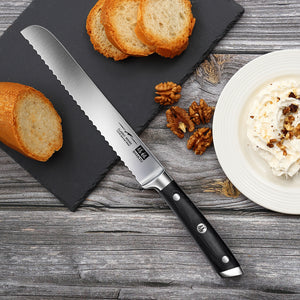
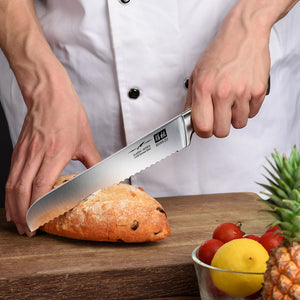
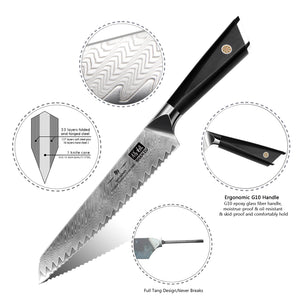
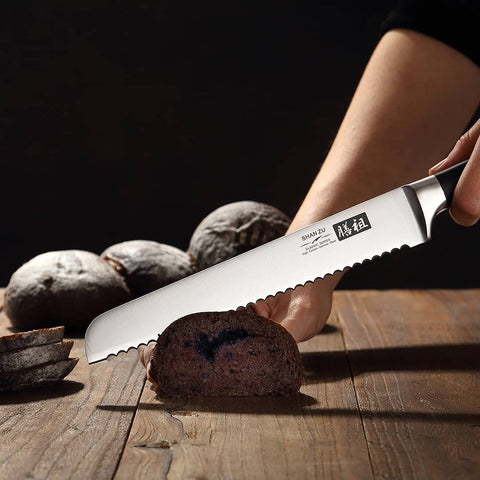
A serrated knife has a blade with a saw-like edge. The serrated design of the blade’s edge allows it to cut easily through tough, thick-textured materials such as crusty loaves of bread.
The serrated, saw-toothed design of a serrated knife gives it an edge over plain-edge knives. Serrations allow the user to approach tough materials at sharper angles with minimal contact points. This sharp-angled approach with minimal contact points increases the applied pressure, ultimately resulting in fast and precise cuts.
Lastly, serrated knives outlast their counterparts in terms of sharpness and maintenance. And that brings us to the main point.
What Causes Knives to Become Dull?
As stated earlier, serrated knives tend to stay sharp longer than plain-edge knives. However, they can still become dull, and this can happen for any of the following reasons:
Using the knife on a glass or stone surface. Friction between the blade’s metal and the stone alters the shape of the serrations and can significantly reduce the knife’s cutting ability.
Placing it in the dishwasher, where it clatters against other utensils, may affect its sharpness.
Using it—or rather, abusing it—for purposes other than cutting. For example, using the knife as a screwdriver damages the tip and causes it to become dull.
Can Serrated Knives Be Sharpened?
As mentioned earlier, serrated knives exert maximum pressure at fewer points of contact, which creates less friction. Therefore, they usually require little maintenance to stay sharp.
However, they can still become dull, and there are various ways to “resharpen” them. Commonly used methods include diamond sharpeners, ceramic honing rods, electric serrated-knife sharpeners, motorized knife sharpeners, and more.
What Type of Knife Sharpener Is Best for Serrated Knives?
Every serrated knife has a different serration pattern. One knife might have 33 serrations, while another might have fewer or more. It all depends on your choice.
Using any of the serrated-knife sharpeners mentioned above requires you to work through each serration individually. That’s why people prefer to leave the task to professionals.
The best way to sharpen a serrated knife is to use a tapered diamond knife sharpener or an electric serrated-knife sharpener, both of which are readily available from professional service providers.
What Is Sharpening Steel?
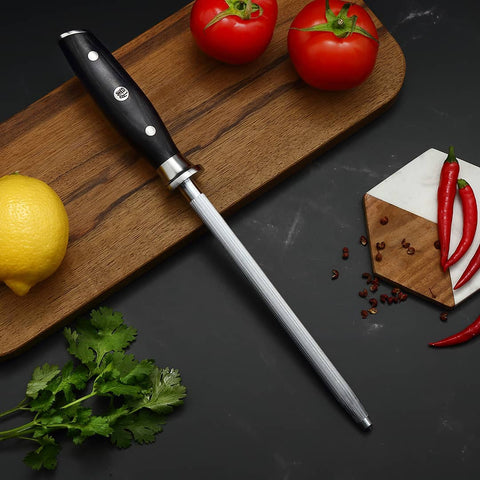
Sharpening steel is also known as honing steel, and it comes in multiple forms, all serving the same purpose: sharpening a knife. Some are made entirely of steel or ceramic, while others are made of diamond-coated steel.
Technically speaking, sharpening steel is not a serrated-knife sharpener. Rather, it aligns the microscopic curls in the blade that may develop over time.
There Are Many Great Knife Sharpeners Available for Your Serrated Knives!
The market is saturated with products claiming to be the best serrated-knife sharpener. That makes it difficult to decide which one would work best for you and your knife. Here’s a simple approach to that dilemma:
Prioritize ease of use when choosing a serrated-knife sharpener. An electric serrated-knife sharpener is intended for professional use, whereas sharpening steel is practical for the average household user.
How to Sharpen a Serrated Knife
Depending on your skills, any serrated-knife sharpener could do the job. Moreover, there’s no fully automatic serrated-knife sharpener. Even a motorized serrated-knife sharpener requires manual handling, so there’s always a risk of injury. That’s why it’s better to leave the task to a professional.
For educational purposes, let’s look at some of the ways to sharpen a serrated knife:
Tools Needed for Sharpening a Serrated Knife
First things first: what tools might you need to sharpen a serrated knife?
But before we get to that, it’s important to clarify that there’s no such thing as an all-in-one serrated-knife sharpener.
Each tool is designed for specific users and their needs. Options range from a simple sharpening steel to a complex electric serrated-knife sharpener.
3 Tips for Sharpening Serrated Knives
Serrated knives can be easily sharpened by following a simple standard operating procedure (SOP). Some things should be strictly avoided, while others are considered good practice; all are discussed here:
- Different shapes and sizes of serrated knives require different sharpening tools. Choosing the right equipment can therefore be a game-changer. In most cases, a standard sharpening rod can cover a wide range of serrated knives.
-
The side of the knife and the angle at which it is sharpened play significant roles in following correct standard operating procedures.
- Only sharpen the beveled side of the serrated knife. Sharpening the other side can compromise the integrity of the blade.
- To avoid damaging the serrations, follow the angle of the gullet, which is usually in the range of 10–30 degrees.
- Knife sharpening requires manual handling, and manual handling calls for safe gripping techniques. To avoid mishaps ranging from minor inconveniences to major accidents, use a vise grip to secure the knife in one position.
A Guide to Sharpening Your Serrated Bread Knives at Home
The DIY method of sharpening a serrated knife involves using honing rods. As stated earlier, sharpening a serrated knife can be tricky because each serration on the beveled side requires individual attention.
Here’s how to use a honing rod as a serrated knife sharpener yourself:
- Of all the varieties of sharpening rods, diamond-coated steel rods provide the best results, closely followed by ceramic rods.
- Regardless of what your sharpening rod is made of, it will have varying thicknesses. This variable thickness allows the rod to accommodate serrations of different shapes and sizes.
- Find the appropriate width for your serrated knife on the honing rod. Then, place that part of the rod between the serrations and drag it along them.
- Maintain an angle of 10–30 degrees and continue dragging the rod away from the blade. Dragging the rod away from the knife helps prevent injury.
- For optimal results, stroke each serration at least 4–5 times.
- After sharpening the beveled side, turn the knife over and stroke the flat edge a couple of times using a regular sharpening stone.
- Wash away the burr and promptly dry the knife. That’s all there is to sharpening a serrated knife yourself.
How to Sharpen a Serrated Knife with an Electric Sharpener
Continued use of an electric serrated knife sharpener risks damaging the serrations. However, there’s no denying that it makes the whole process less labor-intensive. Here’s how to use an electric serrated knife sharpener:
- Clean the blade and determine which stage of the electric sharpener you want to use. Usually, setting it to a fine stage is enough to hone the blade properly.
-
Once you have selected a particular stage on the sharpener, run the blade through it four times as follows:
- While holding it down, pass the blade from the heel of the knife to its tip. Make sure the serrations are in contact with the sharpener’s wheel. Run it through both sides of the serration.
- Repeat the process if the knife has not reached the desired level of sharpness. However, if the sharpness meets your expectations, stop the process and rinse the knife with water before use.
- That’s it. Your serrated knife is now as good as new.
Frequently Asked Questions
1. Can I Sharpen a Serrated Slicer or Serrated Electric Knife?
A serrated slicer, or the electric version of a serrated knife, can be sharpened using the same techniques mentioned above.
A serrated electric knife should be disconnected from the power source. Then, the handle and blade should be removed from the motor and sharpened accordingly.
2. How Can I Sharpen a Serrated Knife Without Any Special Tools?
The complex design of serrated knives requires special tools such as honing rods. Nevertheless, serrated knives can still be sharpened using something as ordinary as an old coffee mug.
The bottom depression of a cup and the surrounding rim together make an excellent knife sharpener. The mechanism is similar to that of sharpening rods: place the serration against the rough bottom and stroke it at least five times to ensure proper sharpness.
3. What Other Steps Can I Take to Ensure My Serrated Knife Stays Sharp for as Long as Possible?
Serrated knives already have a longer lifespan than flat-edged knives. Their longevity can be extended further by avoiding the improper knife practices mentioned in the article. For example, they should not be placed in the dishwasher with other items.
Frequent exposure to water should also be avoided at all costs. The knife must not be used for purposes other than cutting.
Lastly, the blade can become weakened and dull after every fall, so a magnetic knife holder might come in handy.
4. Should You Use an Electric Knife Sharpener to Sharpen a Serrated Blade?
The blades of serrated knives can become damaged if they are frequently sharpened with electric sharpeners. Moreover, the serrations may break or become uneven. Excessive burr formation or metal removal can also weaken the blade.
Ideally, serrated knives should only be sharpened once they have become extremely dull. Even then, it would be better to use a sharpening rod instead of an electric serrated-knife sharpener.
5. Can I Use a Whetstone to Sharpen My Serrated Knife?
A whetstone is one of the easiest ways to sharpen serrated knives. However, the process is very time-consuming and labor-intensive. Its mechanics are more or less similar to those of a sharpening rod.
6. Can You Make a Cheap Serrated Knife Sharp?
As the name suggests, cheap serrated knives are made by compromising the quality of the blade. Electric knife sharpeners already have a damaging effect on the blade’s integrity. A cheaper version will not withstand repeated exposure to sharpening tools.
7. What Is a Serrated Knife Good For?
Serrated knives are good at cutting through tough objects. In the kitchen, they are used to make fast and precise cuts through crusty loaves of bread, tomatoes, and large chunks of meat. A general rule of thumb is that serrated knives are good for cutting through objects with a tough exterior and a soft interior.
8. Is a Serrated Knife Better for Self-Defense?
Their usefulness as self-defense weapons is debatable. Although they can cause serious wounds, experts argue that they may get caught in an attacker’s clothing, rendering them useless.
On the other hand, a serrated knife can easily cut through jackets or any other tough material. In short, serrated knives are only effective if you can get them through clothing and stab directly into exposed flesh.
Conclusion
Serrated knives are a must-have kitchen item if you want to make cutting easier while cooking. The serrations allow them to cut through tough objects faster and with unmatched precision. These knives are also low-maintenance and usually outperform flat-edged knives in sharpness, longevity, and much more!
In the long run, even serrated knives can benefit from sharpening. There are plenty of techniques available, ranging from DIY methods to professional services. Using a sharpening rod is labor-intensive but preserves the blade’s integrity. However, repeated use of electric knife sharpeners can shorten its lifespan.
Now, with all this knowledge up your sleeve, you’re ready to decide whether to purchase a serrated knife or have one sharpened!


Comments (0)
There are no comments for this article. Be the first to leave a comment!