
Best Knife Sharpener 2021
- SHANZU Whetstone Set (#1000/#5000 Grit) with Pakka wood storage box
- SHANZU Premium Whetstone Kit (#1000/#6000 Grit)
- SHANZU Premium Whetstone Kit (#3000/#8000 Grit)
- SHANZU leather sharpening strop kit
- SHAN ZU Professional Knife Sharpener 400/1000/6000 Grit Whetstone
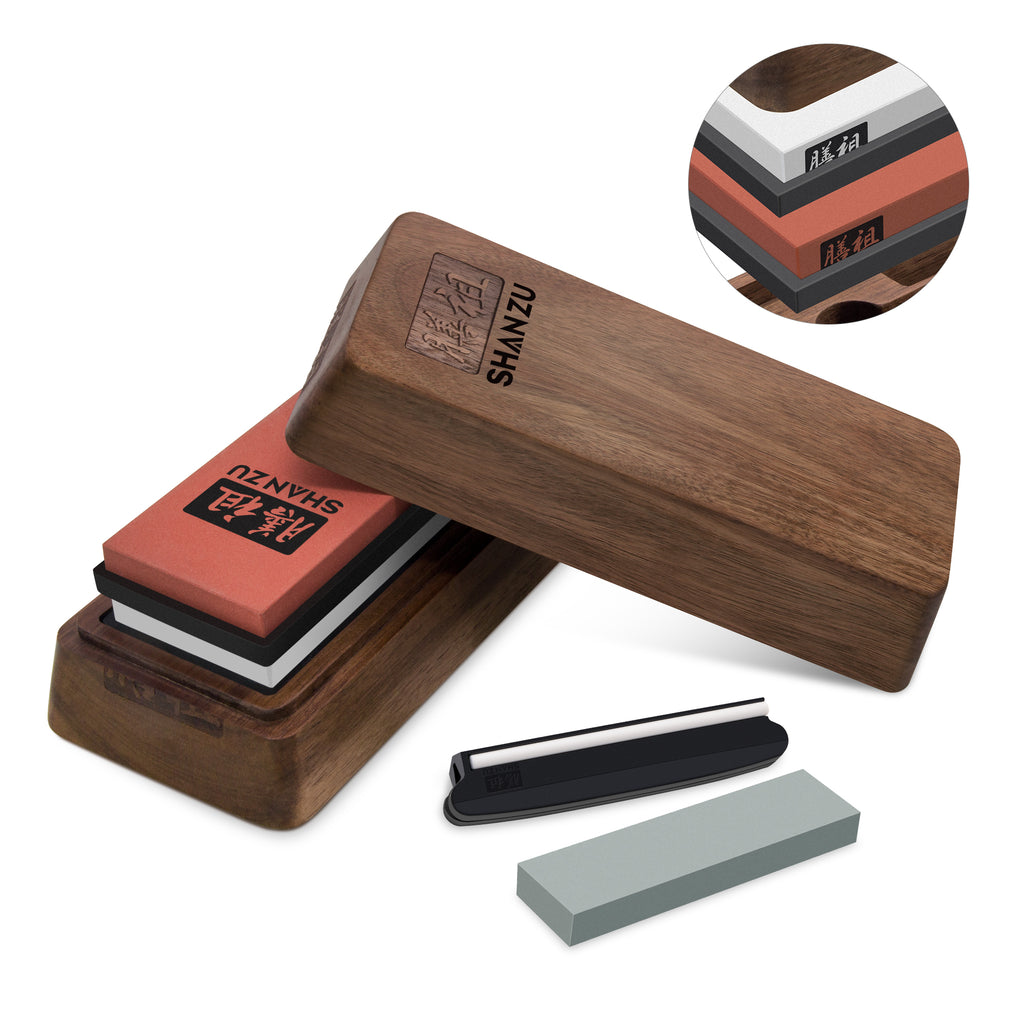
SHANZU 2PCS Premium 1000 and 5000 Grit
When was the last time you sharpened your kitchen knife? If the answer is “gee, I really can’t remember, it was so long ago,” your reputation as a chef might be in danger. As we all know, knife sharpening is an essential part of the cooking process. The difference between a sharp chef’s knife and a dull one can turn the relatively easy task of chopping vegetables or meat into a full-blown nightmare — complete with a trip to the ER if you’re not careful.
Whether you’re a home cook or a professional chef, sharpening your knives every couple of months can help reduce accidents and optimize your entire preparation process. If well done, it can also help extend your knives’ lifespan considerably. Owning a good knife sharpener should be a must for anyone who takes pride in knowing their way around the kitchen.
But which one is the most appropriate for you? When it comes to knife sharpening, all the options available in the market may seem a little overwhelming. That’s why we prepared this useful, detailed guide to help you find the best knife sharpener to bring those dull blades back to life. Let’s get to it!
What You’ll Learn
- What is the best knife sharpener on the market?
- What do professional knife sharpeners use?
- How do I choose a knife sharpener?
- When do you need to sharpen your knife?
- How to use a whetstone?
1. What Is The Best Knife Sharpener On The Market?
As you might’ve guessed, the answer to this question will depend on your needs, level of expertise, and personal preference. Another thing to consider is the type of knife you’ll need to sharpen (chef’s knife, paring knife, steak knife, etc.) and the amount of time you’re willing to invest in it. That being said, the world of knife sharpeners is a fascinating one and we can’t wait to get you started on the topic.
Here are some of the most popular sharpening options:
WHETSTONES
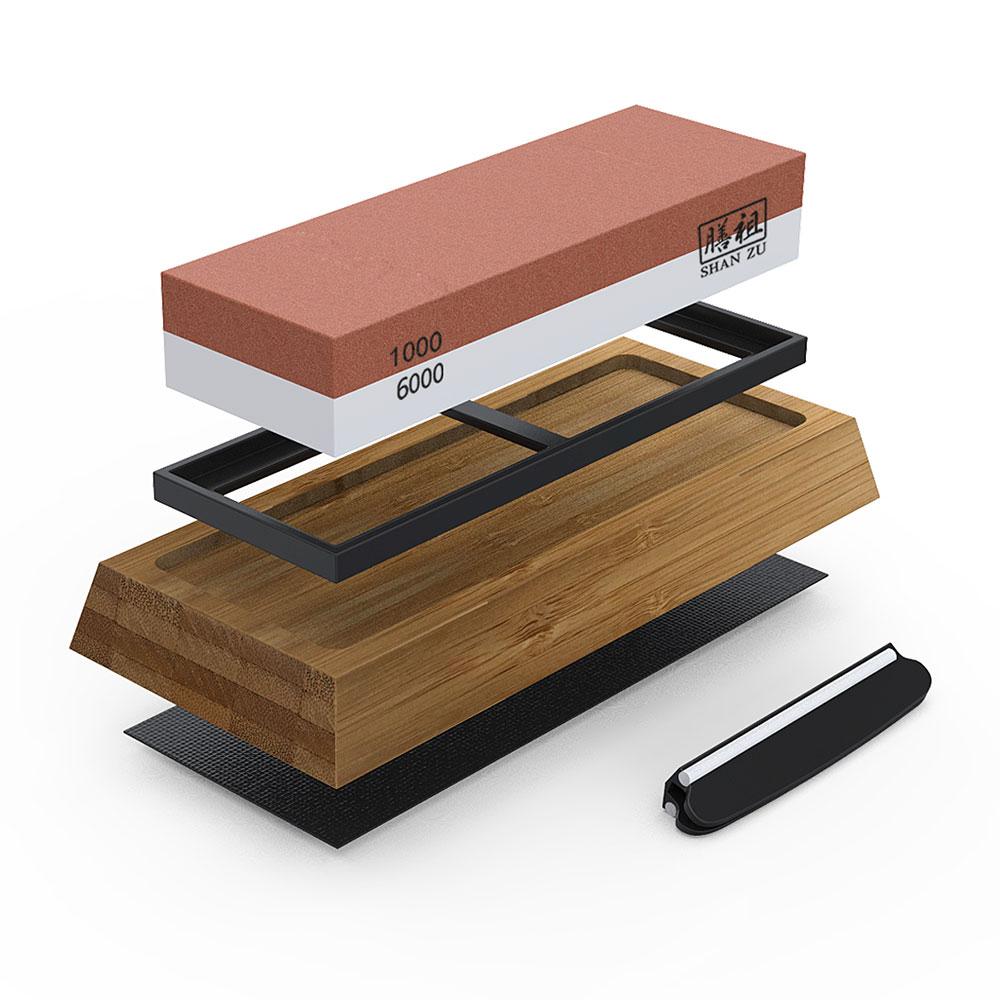
SHAN ZU Whetstone 1000/6000 Grit
Yes, using a sharpening stone or whetstone might be a bit more time-consuming than the other options (the whole process can take between 20 to 40 minutes). But, they offer way more versatility, allowing you to hone and sharpen the blades of your knives at any angle you desire. This is especially convenient if you own a varied collection of knives, ranging from the Western to the Japanese style.
It may take some time to properly master sharpening with a stone, but your chef’s knife will end up with razor-sharp blades, and the process is surely rewarding. Besides sharpening your knife blade, whetstones are also excellent for repairing and bringing that old knife back to life. What’s more, you can also use them to sharpen other objects, such as gardening tools and scissors.
To achieve optimal sharpening results and, therefore, a sharp knife, you’ll need either a multi-sided sharpening stone or at least a sharpening kit with two or three stones of varying coarseness (usually referred to as “grit”).
Pros
- They look really cool
- Versatile
- Some whetstones can last a lifetime
- Whetstones often extend a knife’s life more than electric sharpeners
- They are used for both Western- and Asian-style knives.
Cons
- Steep learning curve
- You need to be precise. The angle at which you hold your blade will determine the grind
SHANZU Whetstone Options:
Low-Grit Stones:
A low-grit stone has two different sides and a grit number below 1000. Each side serves a purpose. One side is for honing, while the other helps remove scratches from sharp edges or chips. You can use this stone to sharpen obtuse blades and other tools with chipped edges. Here are some specific uses for these whetstones.
You can use this stone to sharpen knives that have completely lost their edges
You can restore damaged knives with chips and nicks
Do not use these stones for general sharpening, as they will leave a coarse finish.
We recommend the #400/#1000 Grit:
SHANZU Premium Whetstone Kit (#400/#1000 Grit)-Handcrafted set of top-grade corundum whetstones.
Medium-Grit Stones:
The grit number of a medium-grit stone is usually between 1000 and 3000. These whetstones are ideal for general or regular sharpening, as well as honing to straighten obtuse angles. Compared to low-grit stones, medium-grit stones will give you better results when sharpening your knives. Here are some uses for your medium-grit stone
You can use the whetstone to restore damaged knives and for regular sharpening
You should use the medium-grit stone moderately to prevent your edges from becoming too thin.
With a medium-grit stone, your knife edges become finer than when sharpened with low-grit stones
We recommend the following 3 types:
- SHANZU Premium Whetstone Kit (#1000/#6000 Grit)-SHANZU Top Seller
- SHANZU Whetstone Set (#1000/#6000 Grit) with Pakka wood storage box
- SHANZU Whetstone Set (#1000/#5000 Grit) with Pakka wood storage box
High-Grit Stones:
High-grit stones have grit numbers between 4000 and 8000. They are also called finishing stones. These stones are suitable for sharpening knives used to slice meat and vegetables. Such knives should be very sharp for easier and more precise cutting. Here is more about high-grit stones.
A high-grit stone is ideal for polishing and refining. If you want to restore your blade’s shine, polish it with this stone.
These whetstones are finely abrasive, strong, and very hard. These features allow for detailed finishing.
Between sharpening sessions, you can polish your knife with this stone to preserve your blade.
This whetstone is especially good for sharpening Western knives.
We recommend the #3000/#8000 grit set:
- SHANZU Premium Whetstone Kit (#3000/#8000 Grit)-A #3000-grit stone is an all-purpose stone for sharpening dull or damaged blades, while an #8000-grit stone restores a mirror polish and an exceptionally sharp edge to your blade.
SHAN ZU Professional Knife Sharpener 400/1000/6000 Grit Whetstone
HONING STEEL
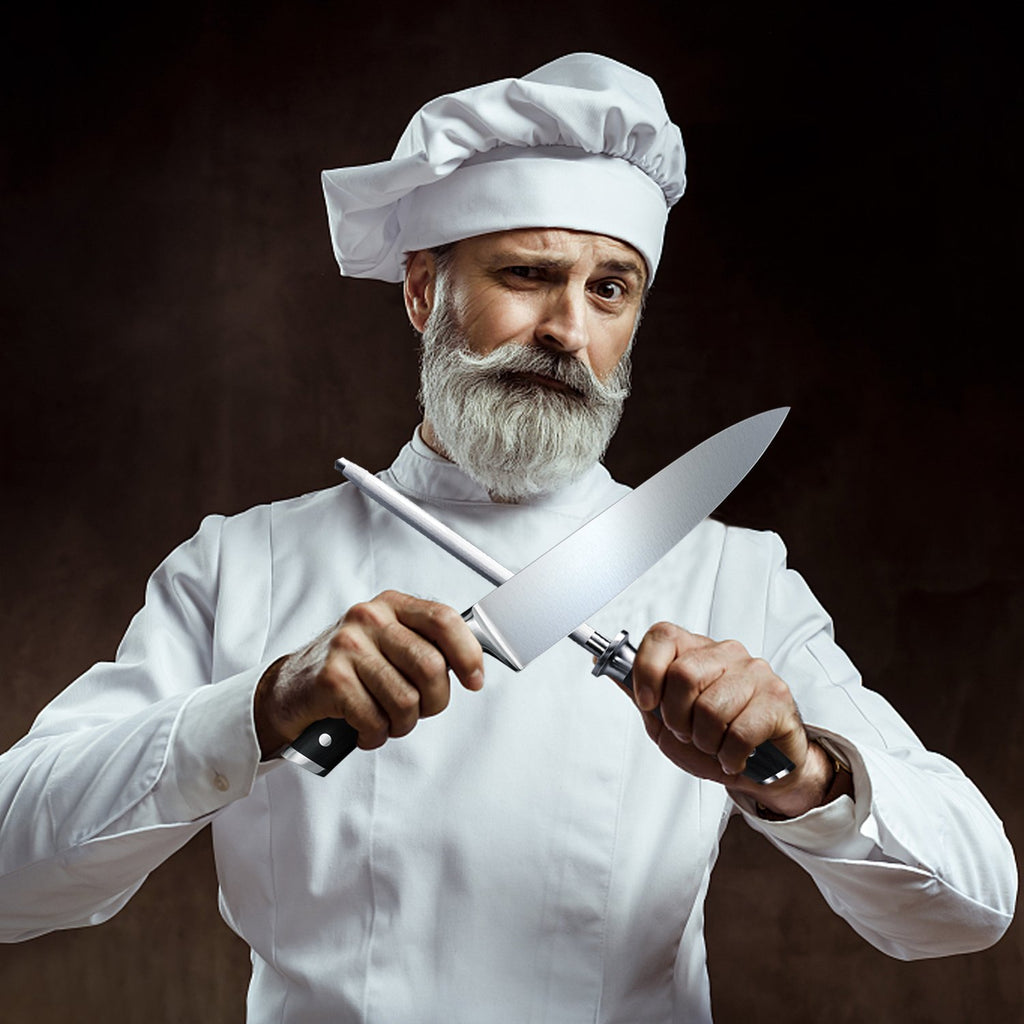
SHAN ZU Professional Knife Sharpening Rod
Also known as “sharpening steel,” the honing steel, or honing rod, is actually more of a complement to your chosen sharpening method than an actual knife sharpener.
Although it helps the blade retain its sharp edge between intensive sharpening sessions, it won’t help repair dull blades. It generally consists of a honing rod made of metal, diamond-coated steel, or ceramic. Using a honing rod also requires a bit of finesse that can be acquired with practice.
Pros
- Using it often means you’ll have to sharpen less frequently
- Inexpensive
Cons
- It takes some time to master the proper sharpening technique
- You need to learn the various angles required to improve your specific blade before you start using your honing rod
SHANZU Honing Steel Options:
- SHAN ZU Professional Knife Sharpening Rod - Precision-forged, ultra-sharp, wear-resistant, single-piece, high-carbon German steel at 55 Rockwell
Leather sharpening strop
SHANZU leather sharpening strop kit
Leather sharpening strop made with premium-quality genuine cowhide leather; the acacia base has a non-slip rubber base; the green polishing compound (chromium oxide and alumina) works with many materials, including aluminum, stainless steel, brass, wood, cast iron, copper, and more. An ideal choice for professionals such as chefs and woodcarvers who want to keep their tools razor-sharp.
Pros
- Suitable for high-end knives
- Less damage to the knives
Cons
- Not as easy to use as a MANUAL KNIFE SHARPENER
SHANZU leather sharpening strop options:
2. What Do Professional Knife Sharpeners Use?
While most home cooks prefer electric and manual sharpeners, whetstones and leather sharpening strops are usually the go-to methods for professional chefs and knife connoisseurs in general. They not only last much longer but are also far more effective than any other knife-sharpening system available.
Waterstones, or whetstones, can be used for Western, Japanese, and pretty much any other type of blade. The process is very straightforward—soak the stone for 5 to 10 minutes, then run the knife against it—but mastering the angle is key. There are many YouTube tutorials available.
Pull-through sharpeners are a whole different beast. Designed for amateur cooks, these manual devices often feature a D-shaped handle and multiple V-shaped channels or grooves that you can draw the knife through to progressively sharpen, hone, and refine its blade. You might want to avoid this sharpening method if you own a Japanese knife, as it is too delicate, but it is perfectly suitable for the sturdy construction of German- and French-style knives.
Similar to manual sharpeners, an electric knife sharpener uses a motorized sharpening system that removes metal from the knife’s blade through a series of wheels or discs in a very convenient and time-efficient manner. While these may save you time and effort, their fixed angle settings make them less versatile overall. Handle them with care—if used too often, they might alter the original design of your knife.
And, of course, let’s not forget about the honing rod. Whether you’re a seasoned pro or just a padawan taking your first steps in the culinary world, a honing steel should always be a key part of your knife maintenance routine. As is well known, frequent honing can help improve your knife’s performance and reduce the time between sharpening sessions.
3. How Do I Choose a Knife Sharpener?
Not all knives are created equal, and the same could be said about knife sharpeners. Although all knife-sharpening techniques follow the same principle—using an abrasive edge to remove metal from the blade—each knife has its own idiosyncrasies and unique features, which should be taken into account when choosing a sharpening method.
As we’ve mentioned before, a whetstone is the most versatile sharpening solution available. It works on almost any type of blade and, despite being known as difficult to master, learning how to use one will bestow a zen aura upon you and help you forge your path toward knife-sharpening enlightenment. Additionally, while not ideal, a whetstone can also be used as a makeshift ceramic knife sharpener—ceramic knives are extremely brittle, though, and sharpening them can be quite a headache.
If you’re too busy to become a waterstone master, the obvious choice is an electric knife sharpener. Yes, you might have to spend a little more on one of these bad boys, but in the end, you won’t regret it. Currently, most sharpening products available on the market work well with both Japanese and Western-style knives, and some of them will even sharpen a serrated blade.
Outdoorsy types might want to choose a handheld sharpener, which is much more portable and versatile enough to work with, say, a hunting knife or a pocket knife. Handheld knife sharpeners usually come with a manual grip, making them easier to manipulate and use at any desired angle.
4. When Do You Need to Sharpen Your Knife?
Depending on how often you use them, you should only sharpen your knives at home every few months or so. For top-notch performance, it is also recommended to have your knives professionally sharpened every other year. On top of that, daily use of a honing rod, or sharpening steel, is a great way to keep your knife’s edge aligned.
What’s the Difference Between Honing and Sharpening?
Basically, honing helps realign the microscopic teeth on the blade, but it won’t sharpen your dull knife. Sharpening works by removing a small amount of steel from the blade, creating a new edge. The difference also lies in the frequency: while honing should be performed daily, you only need to sharpen your knife once every couple of months. They’re both really useful methods for keeping your knives in good condition and top shape.
5. How to Use a Whetstone?
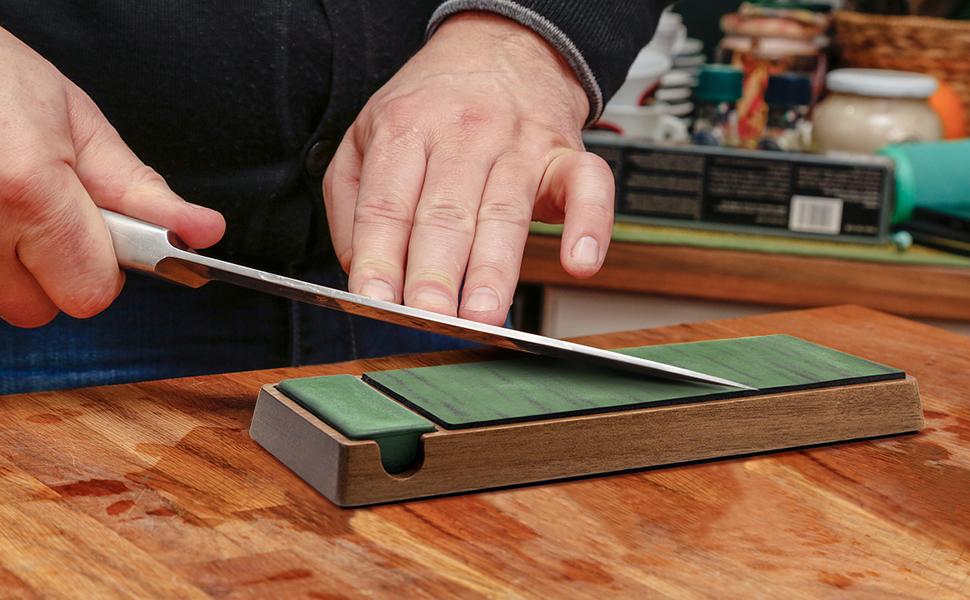
A whetstone is pretty easy to use. You simply move the blade over the stone to remove a layer of steel while exposing another. The knife becomes sharper as you expose a thinner layer. You have to apply some effort to sharpen your blades. The softer the stone, the finer the blade becomes. For best results, you should wet your sharpening stone before starting the sharpening process.
You can follow the steps in the following video on YouTube:


Comments (0)
There are no comments for this article. Be the first to leave a comment!