

A popular tool known for carrying out various tasks in the kitchen, a knife is used for different purposes such as cutting, chopping, dicing, slicing, and peeling. Different knives are used for different purposes and tasks; a serrated knife is used to slice through food.
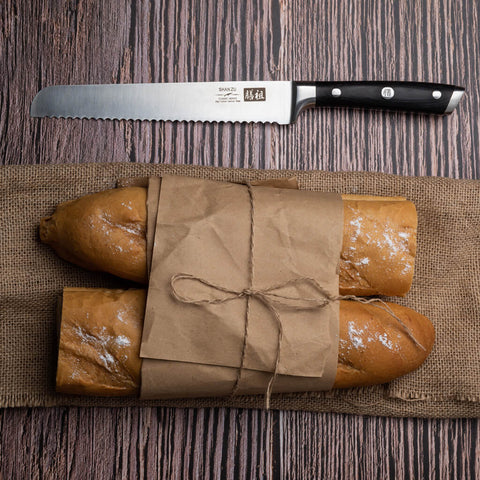
What Is A Serrated Knife?
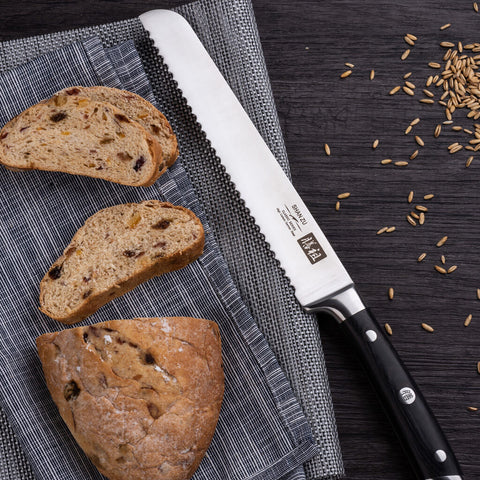
A serrated knife is a knife with a blade that has a scalloped, tooth-like edge that helps cut through foods with a hard exterior and a soft interior. Similar to a saw, a serrated knife has teeth on the blade, which easily penetrate and slide smoothly through food.
Why Does A Serrated Knife Belong In Your Kitchen?
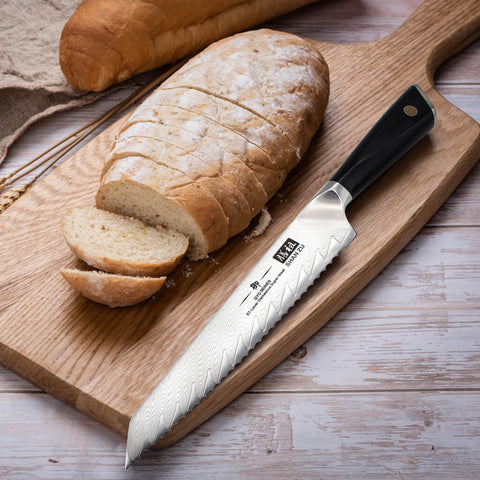
Also known as bread knives, serrated knives are highly efficient at cutting food and easily help you slice through foods that have both thick and resistant outer surfaces. This knife is so efficient that even if its teeth become dull, it will still do a good job of cutting. Designed like a saw, a serrated knife has a razor-sharp edge that allows you to cut food in one go.
Whether you want to slice a thick loaf of crusty bread or want perfect slices of tomato, a serrated knife can easily do that for you. Moreover, as a serrated knife is of high quality, you will only need to sharpen it once every few years, but the sharpening frequency will also depend on your use.
What Are The Best Uses Of A Serrated Knife?
If you have a serrated knife at home, you will be delighted to learn that it offers multiple uses for food items. A serrated knife can be used at home to cut bread into pieces, slice melon or squash, and slice eggplant. If you want your slicing to be done perfectly and accurately, using a serrated knife is wise. Moreover, you can also carve a roast with a serrated knife, as this knife requires less effort than regular knives.
What To Look For In A Serrated Knife?
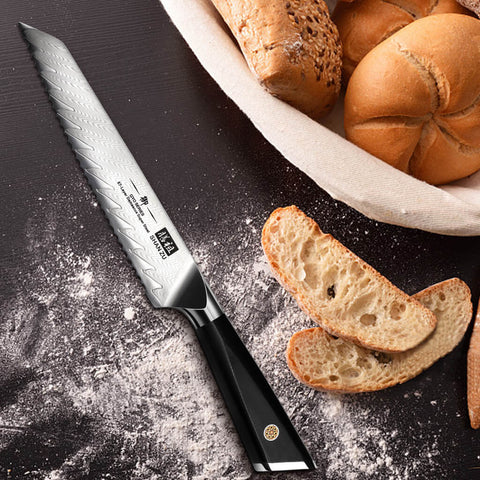
If you are considering investing in a serrated knife, you should opt for a knife with fewer serrations placed farther apart. This is because a knife with fewer serrations will provide a better, more accurate cut. Furthermore, when there are fewer serrations, the force is distributed, so the fewer the serrations, the better it will be for you.
· Choose a firm handle and bolsterWhen handling a knife, you must be able to maintain a good grip on it. If you have a knife that gets wet and slippery easily, it could slip out of your hand and cause injuries. As you will want to control the knife's grip, make sure to try out the knife and see whether it has a durable grip.
The space between the knife handle and the blade is known as the bolster, and it serves as a strengthening element for the knife. When you select a sloped bolster, it will provide you with increased safety and security.
What Causes Knives to Go Dull?
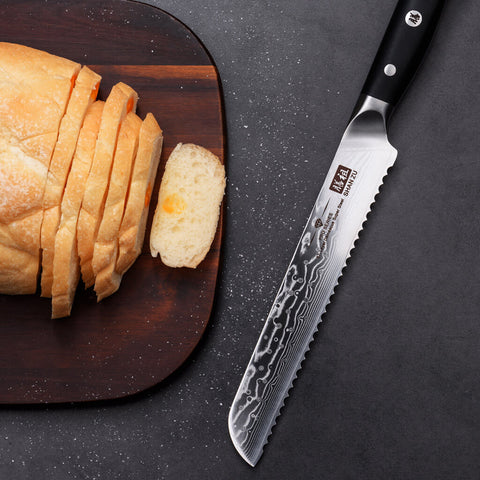
Usually, knives become dull because prolonged use and wear and tear have degraded their edges. Knives can also lose their sharpness when they are repeatedly washed in the dishwasher. In addition, the heat from dishwasher cycles can dull the blades.
Can Serrated Knives Be Sharpened?
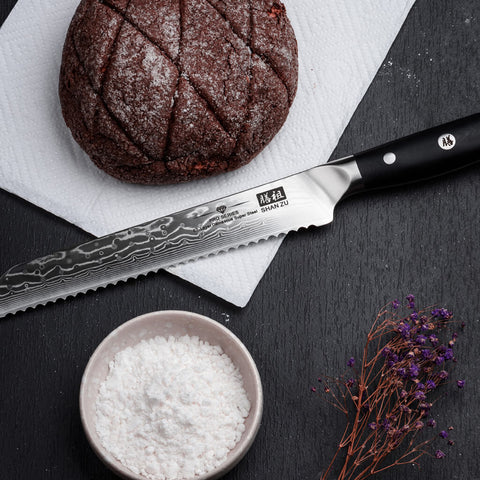
Yes, serrated knives can be sharpened, and they should be when they become dull. The good news is that they do not need to be sharpened very often because they create less friction, allowing the blade to stay sharper for longer.
How to Pick the Best Knife Sharpener for Serrated Knives?
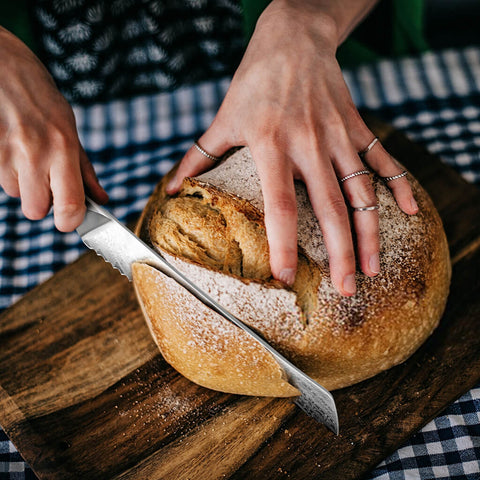
Are you wondering how to sharpen a serrated knife? Most knives are sharpened with a traditional sharpening stone through honing. However, using this type of stone can sometimes dull the serrations, rendering the knife useless.
· What Is Sharpening Steel?
To avoid dealing with a dull knife, many people use sharpening steel to keep their serrated knives perfectly sharp. Sharpening steel is a long, thin rod available in different widths. When sharpening your knife, you can match the rod's measurements and specifications for precise sharpening.
· Sharpening Steels Can Use Different Materials for Finer Sharpening
Made from materials such as ceramic, steel, and diamond, sharpening steels provide different levels of sharpening to meet the needs of serrated knives. If your serrated knife is made of a harder material, you will need to use a more abrasive sharpening steel for long-lasting results.
· The Right Handle Can Provide Greater Comfort and Better Precision
Along with using the right serrated knife, it is also important to choose a sharpening tool with a good grip and excellent durability. Sometimes, sharpening tools have plastic handles, making them difficult and challenging for first-time users to operate.
· There Are Many Great Knife Sharpeners Available for Your Serrated Knives
Shopping for a knife sharpener for the first time can be slightly tricky, which is why the tips mentioned above will be very helpful. When investing in a knife sharpener, keep comfort and durability in mind. If you do, the sharpening tool will prove worthwhile for your serrated knives.
How to Sharpen a Serrated Knife?
To sharpen a serrated knife, use a round hone made of ceramic or steel, and run it through the individual serrations. Once the knife begins sharpening properly, you will feel the edges becoming sharp and know that the knife is ready to use.
How to Use a Sharpening Rod?
Also known as a honing rod, a sharpening rod is a metal rod that comes with most knife sets. Unlike sharpening steel, a sharpening rod doesn't sharpen a knife, but it helps hone the edges of a dull blade. When you feel that your knife has become dull after prolonged use, you can run it across a sharpening rod so you don't have to sharpen it as often.
Frequently Asked Questions About Sharpening Serrated Knives
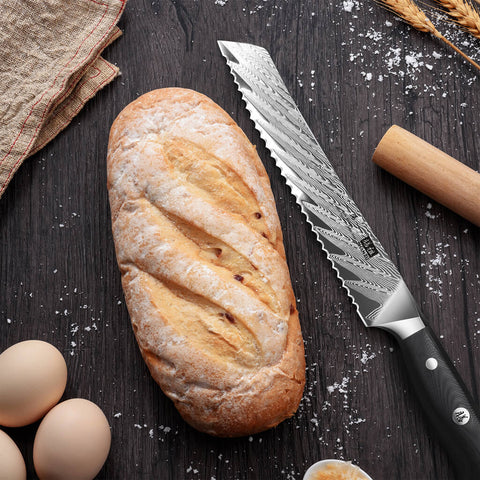
· Can I sharpen a serrated slicer or serrated electric knife?
Like any other knives, both serrated slicers and serrated electric knives can be sharpened when you feel that they have become dull. Make sure you select a sharpener that is sturdy, durable, and easy to use, so you can complete the sharpening process quickly.
· Can I use an electric knife sharpener on a serrated blade?
It is possible to sharpen a serrated blade with an electric knife sharpener, as it is less labor-intensive than other methods. However, many experts say that an electric knife sharpener might not work on a serrated blade, so you should have it sharpened by a professional.
· How can I sharpen a serrated knife without any special tools?
To sharpen a serrated knife at home, turn a coffee mug upside down and place it on a flat surface. Then place the serrated edges of the knife against the bottom and move it up and down. Repeat the process for the best results.
· What other steps can I take to ensure my serrated knife stays sharp as long as possible?
To keep a serrated knife sharp, use a honing steel and slide the knife along the steel. For long-lasting, optimal results, carry out this process once a week.
· How often should you sharpen a serrated knife?
You should sharpen your knives according to how often you use them. If you use serrated knives regularly and they are your go-to knives, you should sharpen them every few months. You can also have them professionally sharpened every two years.
· How to Sharpen a Serrated Knife with a Spyderco Sharpmaker?
The Spyderco Sharpmaker can sharpen both serrated and plain edges. To sharpen a serrated knife, place the knife's edges against the sharpener and move it up and down. Repeat the process until you feel that the knife is sharp.
· When to Sharpen Your Bread Knife?
Like all other knives, you should sharpen your bread knife when you feel that its edges have become dull or coarse. Generally, an average knife needs to be sharpened every 1 or 2 months with frequent use.
· When to Buy a Knife Sharpener?
If your previous knife sharpener has been in use for a long time and you feel that it isn't doing an adequate job, you can replace it. People usually replace a knife sharpener after 5 or 10 years of use.
· What Is the Best Way to Sharpen a Serrated Knife?
To sharpen your serrated knives, you can use honing steel, one of the easiest and oldest sharpening methods. When using honing steel, make sure to pass it through every serration. Once you do that, you will feel a burr, which indicates that you are sharpening it correctly.
· Can You Use a Whetstone to Sharpen a Serrated Knife?
A serrated knife can easily be sharpened with a whetstone because the whetstone can reach between the serrations. However, keep in mind that serrated knives need to be sharpened differently, as each serration requires individual attention.
· Can you cut meat with a serrated knife?
It would help to remember that cutting meat with a serrated knife isn't a good idea. The serrations can produce uneven cuts in the meat and may also dull your knife. A smooth-edged knife is the best option for cutting meat.
· Are serrated knives better to use?
Serrated knives are ideal for slicing all kinds of food because they cut through it very effectively. Even after years of use and becoming dull, serrated knives won't disappoint you, as the serrations have less direct contact with the food.
· Can serrated knives be dangerous?
If you don't spend much time in the kitchen or aren't comfortable handling knives, you will need to be extra careful when using serrated knives. Serrated knives typically have a sharp edge and can be more dangerous than straight blades. Make sure you slice properly when using a serrated knife so you don't injure yourself.
Why Are Serrated Knives Better Suited Than Plain-Edge Knives?
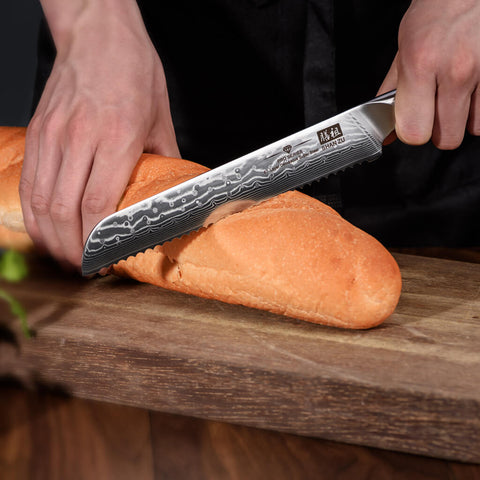
Wondering why you should invest in a serrated knife when you already have a plain-edge knife at home? Unlike a plain-edge knife, when using a serrated knife, you won't have to apply extra pressure while cutting, as the serrations do the work for you.
Moving the serrated knife back and forth will make the precise cuts you need and automatically cut into the food for you. Moreover, a serrated knife provides a secure, comfortable grip, so you won't have to worry about it slipping from your hands or causing something worse.
Furthermore, if you have ever cut a tomato before, you would know that if a knife isn't sharp enough, you will end up crushing the tomato. Imagine losing the tomato's shape and all the juices inside.
On the other hand, if you use a serrated knife, you will be done cutting the tomato in no time, as you won't have to apply much pressure. The tomato will also retain its shape, and you will cut perfectly even slices. Sounds like a win-win situation, right?


Comments (0)
There are no comments for this article. Be the first to leave a comment!